Saturday, 9 July 2016

Systems of Sexuality

Body language and sexuality are inextricably linked. This is where words are lost and 'primal' image takes over. Body language is our most primitive form of communication. For a few years now the Pick-up Artist (PUA) community has been in the internet's spotlight, arguing for a sexual language of radical consciousness. The anti-feminist community red-pill has also been in the spotlight, arguing for male [supremacy?]. 

It is curious that the PUA community is so focused on reading women's body language yet the community has not thought about really studying in detail the ways in which body language can affect society as a whole. Many pickup artists assert that women have specific 'indicator's of interest' (IOI's) that are micro cues that give a man (or woman?) the signal he is doing alright in conversation. One cannot help the crack of a slight cringe at the scientism of their proposal, the possible end result being a system of sexuality. 
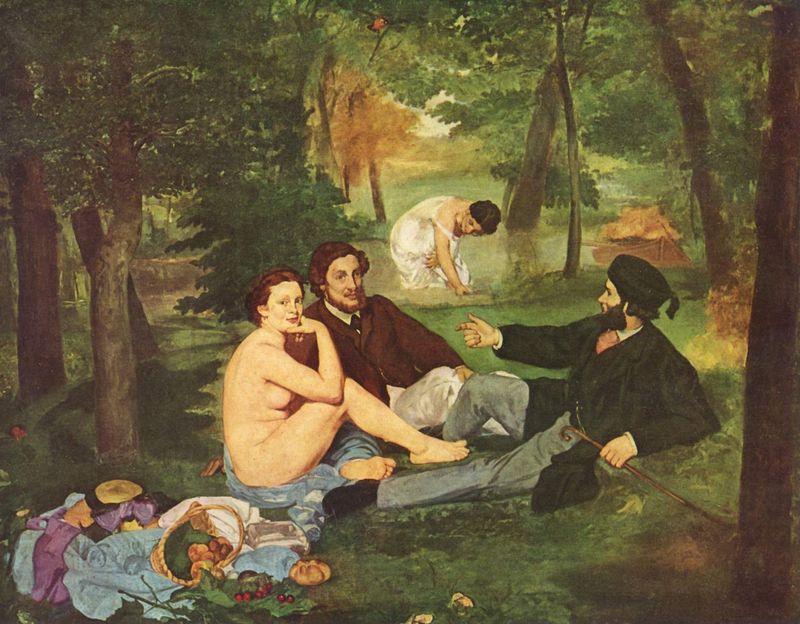


One underlying question is could a woman consciously project her own identifiable set of IOI's? This question may lie on the crossing point between the 'red-pill' interpretation of female sociality (anti-feminist; dealing with psychology) and the PUA community's (potentially progressive; yet largely myopic) interpretation. 

My own speculation is that if women do or did have control over the use of their particular IOI's then it is possible that this would be the very seeds of their liberation from historical repression. The work of 'Jane Eire' illustrates this kind repression perfectly. Society attempted to put external controls on men and women in order to repress what was thought and felt on the inside. Joan Anderson explores this in her excellent piece on Jane Eyre; women have to follow the dictum of 'perfect submission and stillness' [1]. These controls generally took the form of systems of manners. More notably, the liberal philosopher Michel Foucault also gives some insight into how these manners could shape society in his famous works 'The History of Sexuality'.

Essentially, again to speculate, the IOI's that the PUA community discusses would have been taboo in Victorian society. If a woman was to show these mannerisms then perhaps she would be scolded or outcast from society (or perhaps denounced a 'floozy', or derided as an animal). Men could be equally chastised. 

To continue, the only way women would be able to overcome societies controls would be to dismantle their societies mannerly system of sexuality. How would this be done? Probably through the subversion of the existing rules of the existing mannerly systems. That is through techniques of reversal, exaggeration or repetition. We no longer live in this kind of society. 

The red-pill argument is that woman in today's society have to much power over men. Perhaps these claims are true. One could imagine a Machiavellian woman using the today's PUA system of IOI's to get what she wants from a man (be it consciously or unconsciously). If this attitude was to be brought wholesale into society itself then, yes, woman would have significantly more influence over men than at first perceived. One thinks of a bunch of kids chasing candy. 

In this light PUA would simply be a description of the systems of control women have.

Surely the role of men today is not to simply deride women, but to deconstruct these notional new systems of control that are created by women (supported by 'feminist' men). Would the new role of man not be to find his own IOI's for women and to subvert them (thus liberating man in the classical way and evening the playing-field)? Male IOI's being perhaps a flair of the nostril or sideways glance. 

One strategy would be to perform a kind of 'denial of service (hesitant to use the word attack)'; the conscious performance of exaggerated male IOI's to the extent that the responding system of female IOI's becomes redundant. 

Still at the end of the day body language is tantamount to dressing the shop window. 


Saturday, 2 July 2016

Veroosh Tarot

My daily conclave of Tarot subscribers: 

https://www.youtube.com/channel/UCqRBKOf_OvnNNvmbhVVbX-A

Thanks for all your hard work Veroosh!

On Camus

Albert Camus' 'The Rebel' has turned out to be an interesting read. There are a few ideas that he floats along with the central thesis that are small and perhaps surreptitious, however they give great insight into Camus' reading of the world. It is his central thesis that I have already come across though other people, media and education. Below are some points to note from closer inspection of the text (in my own words):

- He states that Karl Marx had no 'scientific' theory of Marxism, however the theories of Marx generated what Camus calls a 'Scientific Marxism'. 
- He suggests that Karl Marx's Das Capital does not take into consideration the role of the nation-state in production of capital. 
- Camus postulates that after revolution the proletariat will instinctively know how to be fair because they belong to the 'universal', as opposed to the 'particularist' bourgeois. 
- He proposes a general rule that when someone questions himself/herself he/she undermines his/her reason for existing, hence suicide becomes the only route.
- He posits absolute truth can only ever end with some form of injustice for someone (therefore suggesting that it is not something to seek).
- In short-hand he states that Romanticism creates the urge for the adoration 'characters'.
- He pontificates that Nihilism created the possibility for both historical socialism and fascism.  

Camus ends with a some bucolic language evoking romantic landscapes and praises the poet Rene Char. The end passage is of a strikingly different tone to the rest of the book. There is much more within 'The Rebel', these are just some of the small important points.

Monday, 27 June 2016

Rethinking Zaha Hadid Architects

"Shakespeare without the shoemaker serves as an excuse for tyranny.", Albert Camus

Based on my previous post the work of Zaha Hadid can be seen in a new light. It is curious that the types of her original buildings between the years 1970-90 (before she achieved critical success) were mainly civic. Some of her earliest buildings were for example 'Dutch Parliament Extension' and 'Irish Prime Minister's Residence'. Her critical success came after the 'Vitra Fire Station'. After this her civic work seems to have dried out. Is this because business wanted 


As I have noted below, her dynamic language of movement and fluidity ought to be associated with civic and governmental buildings as an ethical necessity. This strange inconsistency has become visible in her new project 'Evelyn Grace Academy' - a rigid and hierarchical private school.


Saturday, 25 June 2016

Worshipping the Wrong Gods

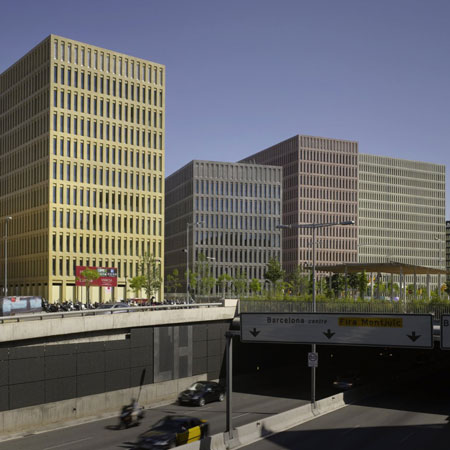
Today my reading of the 'state' has profoundly changed. My original interpretation of the 'civic' as being static, rigid, beneficiary and hierarchical has been shaken up. My original reading was informed through only limited exposure to critical literature and just simply a host of attractive images of 'biscuit boys' governmental buildings. Looking at some modern civic buildings today there seems to be two opposing interpretations. The first is that of static order. David Chipperfield illustrates this perfectly in his Ciutat de la Justícia shown below.


In relative opposition to this is -perhaps- the (correct) humanist reading of the state, as being dynamic, efficient, coercive and ruthless. This is a reading that is, I would argue, closer to the reality today. This is a reading presented in the works of Kafka's 'The Castle'. Kafka tells the tale of an administration hidden beneath strong castle walls. Through time it becomes clear that the paperwork of the castle apparatchiks is forever a shifting sand - the opposite of what a castle is supposed to symbolize.  

Again this reading can be picked up at times throughout history. The work of the Italian Futurists also reflects this hypothesis. Filippo Tommaso Marinetti, the leading proponent of the Futurist movement was 'pathologically nationalist' [1]. The ideas embedded within the Futurist movement were that of speed and dynamism, and no doubt in line with the strong statist politics of the time.

The strong state could also be associated with the historical symbolism of water or liquid with it's fluidity and movement. Liquid can be associated with many things for example, the mothers milk (linking back to the human body) or oasis'. We see these images at times as journalistic jokes and rhetoric - maybe forgetting their underlying symbolism. 


Looking again at Enric Miralles' civic projects through the lens of humanist tradition it is unclear why he was not more critically acclaimed. His aesthetic is more closely related to the real language and practice of government. 

Civic projects are where aesthetics become acute and architectural language becomes preponderant. This reversal in my interpretation really has an impact on the dialect of the public and private. One can now assume that as a dialectical pairing that if government is actually dynamic then business (despite it's efforts to pretend) is actually very static. This the antithesis of what the news media and some politicians project today.

To note my views on politics have not changed, only the way in which I am reading. What is worrying is that reading more seems to change the way I think more than just studying imagery. It is highly likely that the UK's decision to leave the EU has shifted my thought in this direction also. 

Wednesday, 15 June 2016

Home is Where the Wifi Is

The current housing 'problem' is forcing me to take action and to actively find solutions to my own living situation. One extreme aspect of architectural theory insists that change within architecture can only come by the way in which we occupy space and changes within our lifestyle as building users. 

There seem to be two popular options for life at the moment. The first is staying for an extended time in the family home. This is cheap however restricts the freedom that a person of my age ought to have. The other option would be to rent a room in a flat, this would be expensive however would guarantee some sociality. 

Being dissatisfied with both, my thought has turned to alternatives. So for 1 month I decided to try to live in a youth hostel. A bed in a youth hostel in my city is cheaper than renting a flat for a month or getting an AirBnB. Living this way meant a dramatic decrease in my own standards. It turned out to be a perfectly suitable compromise. 

Maybe we need to start dropping our own expectations so that new forms of living can emerge?

It is also curious that the idea of communal living within cities is not taken up by the elderly. The West seems to have the notion that as we age we need to have increased privacy and more personal space. This is perhaps a symptom of the pattern of the way in which we accumulate wealth and property nowadays. If we are going to tackle modern problems of loneliness and isolation ought we not try to live more publicly?


Monday, 13 June 2016

Open-Plan Kitchen/Living Rooms

Recently my knowledge of domestic construction and design has been going into overload. Now it is possible for me to start to combine my own life experience with the knowledge of design gleaned from education. 

A few points about open plan kitchen/living areas:

1. Running water becomes incredibly irritating whilst talking or watching TV.
2. Open plan kitchens make 'back-seat chefs' a possibility.
3. The smells of cooking can get caught in drying clothes or furnishings.