- While 101 Dalmatians was a hit at the time of its release and is considered one of Disney's classic films, it contains several elements that would come to define The Dark Age of Animation for the studio, such as recycled animation, the use of xerography that created a hard outlined look, and an increased emphasis on physical comedy.
- The 1989 Batman film suffered from the problems that at the time were forgivable, but would persist in later Batman movies and reached their peak with the almost-Franchise Killer Batman & Robin.
- The first film was 'Batman: starring Jack Nicholson as The Joker.' Batman Returns was similar — its two villains combined have more screen time than Batman. This led the way for Batman Forever and Batman & Robin to become overcrowded with villains and the same 'villain shows up, teams up with other villain, they fight Batman, Batman wins' plot repeated in every sequel. Michael Keaton and Val Kilmer both left the series because they felt that the movies had become more about the bad guys than Batman. Somewhat tellingly, Burton's Batman even gives a definitive identity and origin story to the Joker—which he has never had in the comics—but is surprisingly vague about Batman's origins. note
- The two biggest flaws present in all four of the Burton/Schumacher Batman films were the semi-obligatory casting of A-list actors as the main villains (whether they were any good in the role or not) and the Bizarrchitecture (which was reasonably subtle and effective in the first film, but by the fourth had become an obscene distraction). You'll notice that the Nolan films invert the first trope by having an All-Star Cast in every main role and avert the second altogether by shooting all their outdoor scenes on actual locations, rather than on soundstages or in front of computer green-screens.
- Batman & Robin is incredibly campy, but there was a certain level of camp present in Batman that only increased with every following installment. The first film had most of the Joker's scenes, from the giant revolver to the museum robbery, and the second film had the Penguin remote-controlling the Batmobile with an arcade machine and eventually plotting to destroy Gotham with an army of missile penguins.
- The manner in which The Dark Knight Trilogy has influenced the stylistic direction of the emerging DC Extended Universe as a whole. When Christopher Nolan rebooted Batman with a far grittier and more grounded series of stories, he was acclaimed for having vanquished the legacy of Batman & Robin. The thing was, the real reason why his films were so successful was because he also remembered to tell engaging, complex stories with three-dimensional characters; the darker tone was merely the means by which he did so rather than the main draw in its own right. Furthermore, Batman, as a Vigilante Man who turned to crimefighting after the death of his parents, proved to be exceptionally well-suited to a darker reimagining. When DC Comics and Warner Bros. applied the most superficial elements of the Dark Knight formula to Superman with Man of Steel, they got hit with a large backlash.
- Francis Ford Coppola included many of his family in the cast and crew of The Godfather, Parts I and II, most notably his sister Talia Shire in an important role. In The Godfather Part III, he cast his daughter Sofia Coppola in an important role that she couldn't handle. Part II also had much of what critics attacked in Part III, namely longtime Corleone associates we hadn't met before causing trouble (Hyman Roth and Pentangeli in Part II, Don Altobello in Part III) and a multilayered plot incorporating historical events (the Cuban Revolution and Kefauver Hearings in Part II, the Vatican Bank scandal and Pope John Paul I's death in Part III).
- The Halloween series is seen as having lost its edge by stripping away the killer Michael Myers' mystique, with later films attaching him to an ancient Celtic curse in order to explain his Implacable Man nature and why he kept targeting the Strode family. It eventually got bad enough that the producers had to declare everything after the second film to be non-canon when they made Halloween H20: Twenty Years Later. This series-derailing problem can be traced all the way back to the second film. In the original, Michael had no explanation beyond him being an escaped mental patient returning to his hometown to kill again, with Laurie Strode and her friends having no connection to him beyond circumstance. The second film, on the other hand, not only revealed that Michael and Laurie were brother and sister, it also implied that Michael's seeming indestructibility was related to the occult. Later films continued piling on new pieces of backstory, enough that the script for the reboot-necessitating sixth film drew heavily from writer Daniel Farrands' Epileptic Trees about the prior films. In other words, that film merely took trends that had been going on unchecked for years to their logical conclusion.
- How the Grinch Stole Christmas! featured needless Adaptation Expansion, confused morals leading to a Broken Aesop, an emphasis on big sets over good writing, some problematic and unfitting jokes, and a few creepy makeup jobs. However, it was saved by Jim Carrey, who was at the height of his popularity and perfectly cast as the protagonist, topped off with an Academy Award-winning look. When the same people made The Cat in the Hat, they cast Mike Myers right when he was starting to slide off the radar, and shoved him into a costume that mostly just looked creepy, leaving the bawdy jokes, rancid morals, and mindless spectacle in the spotlight.
- As explained here
, Maven of the Eventide feels that a lot of went wrong with the film adaptation of Queen of the Damned can be traced back to its much better predecessor, Interview with the Vampire. In Interview, Lestat was a vivacious, lively character who mocked his brooding counterparts, yet those "tortured souls" still came off as sympathetic characters due to their development over the course of the story. Unfortunately, the makers of Queen mistook that as 'brooding = sexy and cool.'
- James Bond:
- All the problems with the Roger Moore and Pierce Brosnan-era movies — the over-the-top gadgets, the bad puns, the overly-elaborate villain plans and death traps — are visible in Goldfinger, where they were still reasonably in check. That these elements were not necessary to the franchise was demonstrated by the 2006 reboot Casino Royale. The caveat to this, though, is that Royale and its immediate followup, Quantum of Solace, have been criticized for feeling less like Bond films and more like a reskinning of Bourne with all of the Bond names.
- The Daniel Craig Bond films have also gone through two noticeable up-and-down periods that both started with a deconstructive period followed by a period of Revisiting the Roots, in that order. To elaborate:
- Casino Royale (2006) got rave reviews for its Darker and Edgier reinvention of 007, and it was widely hailed as a breath of fresh air. Thing is, though, in spite of its grittier tone and minimalistic storytelling, the movie also had enough spectacle to keep the audience engaged (in the famous construction site chase, for instance), and the Big Bad Le Chiffre still retained enough of the classic Bond villain flavor to keep the movie anchored in the world of Tuxedo and Martini fiction; he didn't have a supervillain lair or an arsenal of elaborate gadgets, but he was a genuinely scary Soft-Spoken Sadist who wept tears of blood. For the follow-up, Quantum of Solace, the filmmakers tried to maintain that stripped-down approach, but wound up stripping out most of the spectacle that made Casino Royale work. In trying to do a "realistic" evil industrialist as a villain, they ended up with Dominic Greene, generally considered one of the most boring Bond villains in the series' history; and in trying to tell a simpler story, they wound up with a largely by-the-numbers revenge story with a subplot about hoarding a country's water thrown in.
- Skyfall got similarly rave reviews for managing to bring much of the fun of 1960s-era Bond to The New Tens, balancing out some of the grittier elements of Craig's previous outings by resurrecting some old series favorites. The return of the original Aston Martin DB5, complete with machine guns and ejector seat, was widely applauded by fans, as was the return of Q and Moneypenny. But in spite of its homages to the series' past, it also wasn't afraid to shake up the status quo by killing off M and exploring Bond's childhood with the visit to Skyfall manor. Its followup, Spectre, kept those same trends going, but it was widely criticized for sloppily handling the return of the SPECTRE organization, and its attempt to reintroduce Ernst Stavro Blofeld as Bond's evil stepbrother has proven to be much more divisive. While Skyfall's odes to the past were seen as a good way to complement a genuinely interesting story with a strong antagonist, Spectre has been accused of leaning too strongly on them to round out a weak plot hinging almost entirely on old faces.
- While Craig's films have gotten plenty of acclaim, their attempt to give Bond a definitive Origin Story has always been one of the most divisive things about them. Detractors of Casino Royale (2006) argued that it was an unnecessary Continuity Reboot in a series known for its very loose continuity, detractors of Quantum of Solace argued that it was needlessly weighed down by Bond's angst over losing Vesper Lynd, and a few people argued that Skyfall stripped Bond of much of his mystique by showing us his childhood home and introducing us to the man who raised him after his parents' death. In spite of all that, the movies generally had strong enough original plots that they could still stand on their own, and Bond remained as Badass as ever (his relative inexperience was something of an Informed Attribute). But when Spectre tried to give the same Origin Story treatment to Ernst Stavro Blofeld—"explaining" that he and Bond grew up together, and that his hatred of Bond was a twisted case of Sibling Rivalry—detractors accused it of being an embarrassing case of Villain Decay that made it all but impossible to take the story seriously.
- After Peter Jackson's The Lord of the Rings trilogy debuted, the general consensus of them were that they were the best potential LOTR adaptations that the books were likely to get. Some criticism was directed at the overly long ending(s), but they were mostly joked about than harshly derided. When Jackson's King Kong (2005) came around, consensus also was that it was great, but that Jackson might have overdone the homage to the original a tad, resulting in the film being much longer and more padded than it should be. Then when Jackson returned to Middle-earth with The Hobbit, enthusiasm for them dipped upon the announcement that it would be split into three films, despite the book being shorter than any of the Lord of the Rings books. The resulting films have been highly divisive, with many criticisms directed at the over-length of the story being stuffed full of unnecessary padding.
- In Lord of the Rings, Jackson notably played up the roles of Arwen and Eowyn and put some more focus on romance. Though not everyone liked it, it did help give the films a strong Periphery Demographic among girls and women. Their success was likely the inspiration behind Tauriel being created wholecloth for The Hobbit, and her Romantic Plot Tumor became one of the series's most criticized aspects.
- The Matrix and its sequels are a smorgasborg of trippy visuals, stylized action, and East-meets-West philosophy. But whether as the first film stayed compelling by the freshness of its concepts, its relative subtlety, and understandable story, the sequels went overboard with its own formula, resulting in CG-heavy action divorced from character interest, a too complicated and Anvilicious story, and entire scenes of random oracles sitting around and droning at length about incomprehensible philosophy. Josh Friedman, creator of Terminator: The Sarah Connor Chronicles, alleged that
- The rise of Miramax Films is often cited as a major contributor to the much-maligned advent of Oscar Bait at the Turn of the Millennium, but some of the warning signs for the trend could be seen even back in the studio's glory days in the 1990s. Back then, cinephiles praised Bob and Harvey Weinstein for supporting promising independent filmmakers like Kevin Smith, Quentin Tarantino, and Steven Soderbergh, who gave us beloved '90s Cult Classics like Clerks., Pulp Fiction, and sex, lies, and videotape. However, even though those films were widely praised for their originality and experimentation, they could be thrilling, funny, and irreverent at the same time, and dipped into action and comedy as often as they dipped into drama.
Unfortunately, their success also planted the idea that having a film win critical acclaim and clean house at awards shows could rake in just as much money as having it open big at #1 its first weekend. The Weinsteins would essentially build their entire business model on that premise, with some very controversial behind-the-scenes efforts devoted to ensuring that their films got recognized at the Academy Awards. The English Patient and Shakespeare in Love ended up winning Best Picture over Fargo and Saving Private Ryan thanks to those efforts, resulting in two of the most controversial Award Snubs in the history of the Oscars. To make matters worse, plenty of other studios proved eager to beat Miramax at its own game, producing a slew of depressing, ambitious, and self-consciously "weighty" dramas during the winter months designed to pander to the tastes of film critics and Academy voters (specifically, the "old guard" whose formative cinematic experiences came in the '60s and '70s), which often wound up just as hollow and formulaic as the crowd-pleasing blockbusters released during the summer months. In the modern age of the Oscars, "genre" films are all but excluded from upper-tier awards for Directing, Writing, and Acting, and you can nearly always tell when a studio is banking on an Oscar by watching for the obligatory scenes devoted to showing off an actor's range.
The Nostalgia Chick puts the origin of Oscar bait further back - By the time of its self-destruction with the sixth film, Freddy's Dead: The Final Nightmare, the Nightmare on Elm Street series had fallen into almost literal self-parody, with Freddy Krueger a comedian first and a killer second. The overarching plot had also become needlessly complex, with Freddy developing a backstory that stripped away his mystique. (As a result, when Wes Craven returned to the series with New Nightmare, he expunged all traces of camp from the character and set the film in a 'real-world' continuity where the Nightmare films existed In-Universe. Freddy vs. Jason and the remake followed much the same Darker and Edgier route.) Both of these elements can be traced back to the third film in the series, Dream Warriors, generally regarded as the best of the Nightmare sequels and even a rival to the original by some fans. Here, Freddy first began to take on his jokester persona, but he was still Faux Affably Evil, his twisted sense of humor only getting under his victims' (and the viewers') skin that much more. As for his developing backstory, well, "the bastard son of a hundred maniacs" is still an unforgettable line.
- While the final three The Pink Panther movies (not counting the 2006 remake and its sequel) are frequently criticized for their reliance on questionably funny Running Gags, outdated racial stereotypes and over-the-top humor more suited to the Pink Panther cartoons than their live-action cousins, in actual fact most of these began during 1978's Revenge of the Pink Panther, the last one generally regarded as being any good. As to why Revenge works and most of the subsequent ones didn't, most fans have one simple answer: Peter Sellers was still alive.
- The flaws that built to a fever pitch in Rocky IV (overuse of montages, implausible fight scenes, schmaltz, lionizing Rocky) were mostly present in earlier films. In particular, the first film featured a pretty believable fight (Rocky was lucky and determined, Apollo was playing, caught off-guard, and still won), which became less believable in the second film (Rocky was still injured, Apollo had been training for months), but it didn't seem impossible. In Rocky III, Clubber Lang losing to Rocky was seriously stretching it, given that Lang was younger, taller, heavier, and tougher than Apollo while Rocky was significantly older, but he at least had something resembling a character and was within the realm of possibility. By Rocky IV, the main villain has no personality and appears to be physically superhuman while Rocky had only gotten older, abandoning any semblance of down-to-earth realism as a thirty-nine-year-old goes fifteen rounds with a cartoonish muscleman who should be able to knock his head off his shoulders in a single punch, no matter how many trees he cuts down.
- The first film in the Saw franchise had two Signature Scenes that, in hindsight, foreshadowed the problems that plagued the series in its later installments.
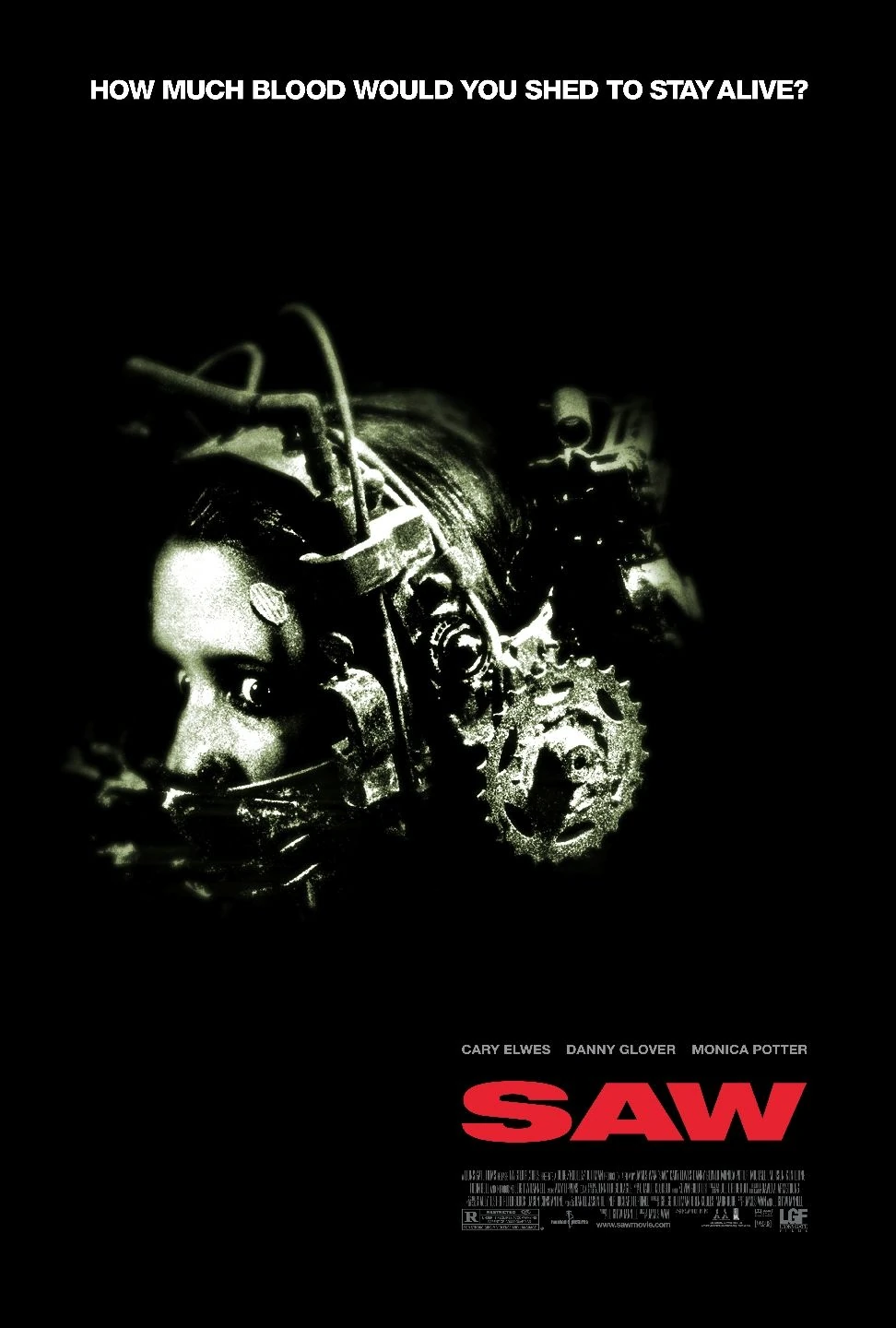
- The first was the 'reverse bear trap' scene. The Saw sequels' reputation as the Trope Codifier for Torture Porn is so infamous that few people realize just how light on blood the first film actually was, with many a Gory Discretion Shot instead of a gushing arterial spray. The Jigsaw killer's death traps were modest in scope, such as being forced to crawl through razor wire, walk barefoot over broken glass, or cut one's foot off in order to escape being locked away forever. The reverse bear trap was the lone exception, relying on intricate machinery to tear open the victim's jaw, but even then, it was a small contraption that a skilled engineer (like the Jigsaw killer, who was established as a Gadgeteer Genius through his creation of this device) could build in his spare time.
Overall, the scene didn't factor much into the plot (the character Amanda's importance came entirely in the sequels), but it was still a standout moment that was prominently featured on the posters - The second was the Twist Ending. The Reveal that the seemingly dead man in the middle of the room was not only still alive, but was in fact the Jigsaw killer didn't really have much of an effect on the plot once you thought about it, especially given the more important reveal in that scene concerning Zepp, but it worked at its intended goal of shocking the audience, and when paired with Charlie Clouser's downright epic "Hello Zepp" theme
- The first was the 'reverse bear trap' scene. The Saw sequels' reputation as the Trope Codifier for Torture Porn is so infamous that few people realize just how light on blood the first film actually was, with many a Gory Discretion Shot instead of a gushing arterial spray. The Jigsaw killer's death traps were modest in scope, such as being forced to crawl through razor wire, walk barefoot over broken glass, or cut one's foot off in order to escape being locked away forever. The reverse bear trap was the lone exception, relying on intricate machinery to tear open the victim's jaw, but even then, it was a small contraption that a skilled engineer (like the Jigsaw killer, who was established as a Gadgeteer Genius through his creation of this device) could build in his spare time.
- In addition to its post-modern parody of slasher movies, the Scream series was also known for having a surprisingly strong focus on characterization for the genre it was in. Everybody had their own backstories and motivations, all the better to create red herrings and make viewers question who the killer was. In the third film, however, this turned against the series and dipped into pure melodrama. The entire plot revolved around the protagonist Sidney's family backstory, and the killer's motivation hinged on familial relations that weren't even hinted at for that character before The Reveal. The first two films had similar reveals of the killer having some personal connection to Sidney, but they made sure to tie it to information that had already been revealed or otherwise implied in the story. The third film, meanwhile, had a new writer with a very different understanding of the characters, as well as a Troubled Production that saw substantial rewrites, including a different killer.
- Many of Aaron Seltzer and Jason Friedberg's trademark writing traits (shallow, narrow parodies depending more on references and audience recognition than actually making fun of the target, regardless of how well the reference works with the movie itself) are fully visible in their earlier, funnier movies, Spy Hard (which was barely saved by some of its clever bits, including its theme song by "Weird Al" Yankovic) and Scary Movie (which was saved by having four other writers, including the Wayans brothers at the height of their careers). Then the duo dived headfirst into directing their own movies, with every problem that plagued the last two movies amped Up to Eleven and creating some delicious Snark Bait in the process.
- At the time of The Sixth Sense, M. Night Shyamalan didn't have any reputation to speak of, so nobody saw the film's Twist Ending coming. The problem came when Shyamalan started relying on twist endings in his films, a problem that first became apparent with Signs, generally considered the last film of his that's any good. By the time of The Village, viewers had learned to see it coming, and his reputation and the quality of his films suffered for it.
- One of the principal reasons Spider-Man 3 is the least liked in the original Spider-Man Trilogy is because it was too goofy. The first and second films are far from devoid of silliness, but that element provided actual levity in those first two movies because a) they had more focused plots, having only one super-villain apiece, compared to the third having three, and b) they didn't take the silly humor overboard. The infamous 'dancing emo Peter' sequence in 3, on the other hand, took it way too far.
- Although it did save the Star Trek franchise, Star Trek II: The Wrath of Khan started the trend of every Star Trek film being built around a confrontation with one particular villain, as it was the first in a very long line of Actionized Sequels.note For better or for worse, this was a necessary change of pace for the series after the lukewarm response to Star Trek: The Motion Picture, which went for a more cerebral storyline but was roundly criticized for its slow pace. Two decades later, when Star Trek: Nemesis became a Box Office Bomb after being criticized for its one-dimensional villain and its gratuitous action (most infamously, the nonsensical car chase that comes out of nowhere), the producers finally realized that they couldn't keep milking the old Wrath of Khan formula indefinitely. The Star Trek reboot films avoided that pitfall by placing less emphasis on the big villain and more on the ensemble cast trying to deal with the villain's plot.
- Star Wars:
- The original trilogy has all the elements that would come to be widely criticised in the prequel trilogy, including wooden dialogue, the uninspired romance in The Empire Strikes Back, the Wacky Wayside Tribe Kid Appeal Characters in Return of the Jedi, and even as early as A New Hope one can tell that Lucas was mostly focused on the visual aspect of the movie rather than getting the best performance from the actors. It was a combination of his vision and his collaborators that helped forge the original trilogy into the well-liked works they are; it also didn't hurt that his actors (particularly Harrison Ford) weren't afraid to ad-lib and improvise to make their performances feel more authentic. As some of Lucas' collaborators went on to other projects and didn't come back for the prequels, combined with massive Protection from Editors, he no longer had that support that kept his weaknesses from showing.
- The franchise was known for having underdeveloped villains all through the original trilogy, but it wouldn't become a glaring handicap until the prequels came along. The Imperials were cartoonishly evil Space Fascists with little motivation beyond crushing our heroes, but that could be forgiven because it was actually fun to root against them: they were anchored by charismatic performances from screen legends like James Earl Jones and Peter Cushing, they invoked real-world dystopias enough that they actually seemed threatening, and they had enough Kick the Dog moments that it actually felt cathartic when the heroes won. But in the prequels? The Trade Federation just gets a throwaway line about protesting "taxation of trade routes" and a lot of Offscreen Villainy regarding the people of Naboo to establish them as the bad guys, and the Separatists just get some vague mumblings about "intentions to leave the Republic" and being led by the Sith, without even mention of their doing really evil things. Hell, the most memorably "evil" act in the whole trilogy is Order 66, which is done by the Republic. There's a reason why Rooting for the Empire is a time-honored tradition among Star Wars fans, but Rooting for the Separatists most definitely isn't.
- When criticizing the prequels, many fans are likely to moan about the movies' focus on politics at the expense of action, often pointing out the many long scenes in the Galactic Senate chamber. It's easy to forget that A New Hope actually incorporated a fair bit of politics into its story as well: Princess Leia uses a diplomatic mission as a cover for transporting the Death Star plans, several characters discuss the Imperial Senate's growing support for the Rebellion, Luke and Biggs talk about the Empire's plans to "nationalize commerce in the central systems" in a deleted scene, and a major plot point involves the Moffs' rise to power in the wake of the Senate's demise. The difference? In A New Hope, the politics never eclipse the central struggle between Good and Evil, and there are enough memorable villains and relatable heroes that the audience never forgets what's at stake. In addition, the politics in the original are a lot more understandable and fairly ironclad: Tarkin wants more power and more favor with the Emperor, Tarkin builds giant battlestation, dissolves treacherous Senate, blows up anyone who disagrees. Compare this to the prequels, where Palpatine's plots are both ridiculously complex and seem to work only because every single person in the galaxy is an idiot.
- George Lucas' tendency to Retcon elements in his own series was present as early as The Empire Strikes Back and resulted in some shocking but ultimately widely acclaimed decisions, such as having Darth Vader as Luke's father, and having the Emperor as a powerful Sith Master. Several years later, it resulted in first a few, then many controversial changes to the original trilogy, many of them to accommodate the prequel trilogy—even though the prequel trilogy became even more controversial for several more Retcons that frequently led to unresolved Continuity Drift. In particular, there was the decision that Leia's mother died in childbirth, that Owen Lars wasn't actually related to Anakin, that Yoda was never actually Obi-Wan's personal Master, and that the clones from the Clone Wars actually fought on the Old Republic's side.
- One of the biggest complaints regarding The Force Awakens is that Rey is unrealistically good at too many things without any justification, but the same can nearly be said of Luke, who was an incredibly skilled pilot and marksman (possibly the best pilot and marksman in the whole Rebellion) despite being a sheltered farm boy. With Luke, there's a flimsy Hand Wave of his abilities in that he apparently spent his free time shooting rats from an airspeeder, but with Rey, the audience is left to wonder where she picked up many of her skills, and that has really brought the question of whether or not she's overpowered into the light. Likewise, many were upset at how quickly Rey was able to successfully utilize the Force in order to win a fight without any proper training, even though Luke did the same thing with a tiny bit of training in A New Hope, and for being able to win a lightsaber duel with no formal duel training, yet Luke managed the same thing in Return of the Jedi - and Rey's opponent went into the fight injured, while Luke's adversary wasn't burdened by any injury he hadn't been enduring for twenty years at that point.
- Superman:
- Superman: The Movie and its sequels suffered from this with Superman II noticeably adding more campiness and more New Powers as the Plot Demands, the third one just made it worse, and then the fourth one... happened.
- Both Superman Returns and Man of Steel were accused of being Anvilicious with their space Jesus/God symbolism. But in that respect, it only follows the lead of the Reeve Superman films, though there it was at least restricted to Jor-El's speechifying. Still, it's not to be found in the comics; Jor-El doesn't have any higher destiny in mind for Superman and Earth unlike Marlon Brando and Russell Crowe's portrayals, he just wanted his son to live.
- Terminator:
- For an all-powerful, hyper-intelligent supercomputer, Skynet's plans are incredibly convoluted. Over the years, many people have pointed out all the ways Skynet, with its unlimited resources and supposedly limitless intellect, could have killed John Connor or even the Human Resistance outright. This was forgivable in the first two movies because time travel was spoken of as a last-ditch effort, so Skynet didn't really have much time to plan. However, with each subsequent movie, book, comic, series, etc. that's released, the time-travel-was-a-desperation-move aspect gets retconned further and further, meaning that Skynet has essentially unlimited time to plan. This has the adverse effect of making the central premise of the series not only less believable but harder to keep straight, since time travel theorems are both way over the average audience member's head and very easy for writers to screw up. Case in point: when Terminator Genisys made an attempt to corral the Timey-Wimey Ball that the series' continuity had become, it wound up only making the problem worse.
- In general, Terminator 2: Judgment Day kicked off most of the franchise's worse trends. While the first film was a low-budget sci-fi horror film, T2 was a big-budget Actionized Sequel, due in part to the Sequel Escalation involved in making a Terminator the hero. However, T2 was still genuinely scary at points, with the T-1000 being a memorably frightening antagonist, and the non-Terminator characters remained vulnerable despite their Action Survivor status — plus having the Terminator do a Heel–Face Turn was genuinely pretty amazing to see at the time. Later films, books, and other media would jettison the series's horror/slasher elements entirely, to the point of being nothing but action films with action-star protagonists (even the ones who don't have the Terminator, a bulletproof, mass-produced cyborg, taking up the hero slot), destroying what tension remained.
- The X-Men films were always criticized for their blatant overuse of Wolverine, but it didn't really start to get out of hand until X-Men: The Last Stand and X-Men Origins: Wolverine, which are universally cited as the low points of the series. In the first movie, it was forgivable because Hugh Jackman was still a new and exciting actor, and the film also had Rogue as an Audience Surrogate—but most of the movie was still shown through Logan's eyes, and the big climax still basically amounted to the other heroes throwing Wolverine at Magneto's doomsday device and letting him fight Mystique and Sabretooth one-on-one. And in the second film, Jean and Nightcrawler both got notable arcs, but much of the plot was still dominated by Wolverine's efforts to get to the bottom of his past, with Cyclops and Professor Xavier spending most of the movie imprisoned in the Big Bad's fortress. In the third film? Rogue vanishes after deciding to take the cure, Cyclops and Professor Xavier are killed off anticlimactically, there are extended scenes involving Wolverine taking on Magneto's army singlehandedly, and Jean barely seems to remember that she was in love with Scott years before she met Logan. By the time they cut out the middleman and gave Wolverine his own spinoff, they barely had anything interesting left to do with the character, and critics trashed the movie for forgetting to put in any memorable characters who weren't named "Logan".
- One of the most common criticisms of Hollywood in The New Tens is that movie studios increasingly tend to rely on profitable Cash Cow Franchises at the expense of supporting original standalone films that can work on their own, to the point that some movie critics have called the decade "The Franchise Era of Hollywood". In fact, many of the worst excesses of the so-called "Franchise Era" can be traced back to several successful movie franchises from the Turn of the Millennium that are still quite fondly remembered by many moviegoers today—in particular, New Line Cinema's The Lord of the Rings movies, 20th Century Fox's Star Wars prequels, and The Matrix trilogy and the Harry Potter films from Warner Bros.. Notably, all of those series were more-or-less planned as series from the very beginning, many of them had several sequels that went into production at the same time, and all of them (except The Matrix) were either big-budget movie adaptations or big-budget follow-ups to previous films; the Harry Potter films even featured a Grand Finale that was long enough to be stretched into two movies—a fairly rare move at the time, which made for a pretty high-profile motion picture event.
But in the 2000s, such major movie franchises attracted buzz because they were fairly rare occurrences, and movie studios only really gave the "franchise treatment" to intellectual properties that could be justifiably seen as deserving several Epic Films. The Lord of the Rings was based on a trilogy of beloved fantasy novels that had been popular for nearly 50 years before they were made into movies, the Star Wars prequels were follow-ups to the most popular film saga in cinematic history, the Harry Potter films were based on one of the most massively popular book series of the 20th century, and The Matrix didn't get its two sequels greenlit until film critics started hailing it as one of the best American science-fiction films since Star Wars. And even when they did support movie franchises, studios generally knew when to stop, and only did as many movies as it took to tell a story.
In the 2010s, some moviegoers are understandably wary of franchise films when they account for around three-fourths of the films at the box office, when studios occasionally try to keep franchises going indefinitely, and when they fill movies with obvious padding to justify stretching one movie into several parts. Compare those aforementioned films to franchises like Twilight, The Hunger Games and The Hobbit, which got much more divisive receptions when they tried to stretch their final installments into bloated two-part epics—or, in the case of The Hobbit, tried to stretch a fairly short novel into a trilogy of films that ran nearly three hours apiece. Also compare those films to Batman v Superman: Dawn of Justice, which has faced some backlash for jumping straight into a Batman/Superman crossover before even giving Man of Steel a proper sequel, and for shoehorning Wonder Woman and Aquaman into the story just to make it easier to set up a future Justice League movie. Even the critically acclaimed Marvel Cinematic Universe has been criticized for trying to plan additional movies over a decade in advance, as if their movies couldn't possibly fall out of popularity before then. And while Star Wars: Episode VII — The Force Awakens was a big hit with audiences, the announcement that Lucasfilm will now release at least one new Star Wars movie every year has been much more divisive, with cynical fans pointing out that the series can't possibly stay fresh forever.