Monday, November 21, 2011

State Visit to Japan in thousand words

The trip to Japan was more than a state visit.  It was a journey.  A journey of life, hope and friendship. Something unexplainable which can perhaps be expressed only through images. So while I try to put together my thoughts and reflections, here is a photo reportage.


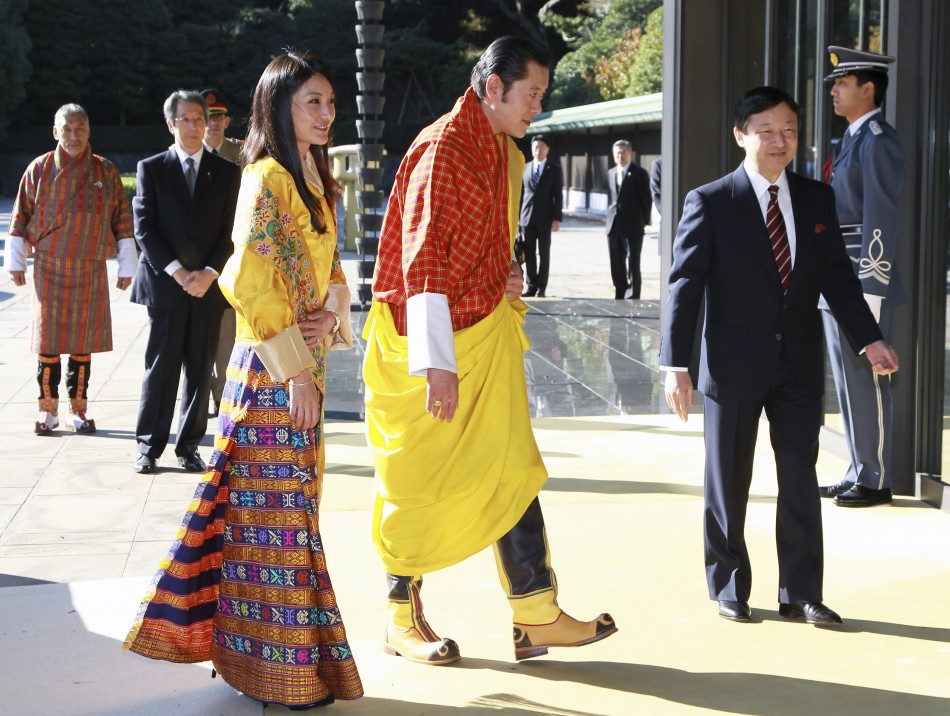
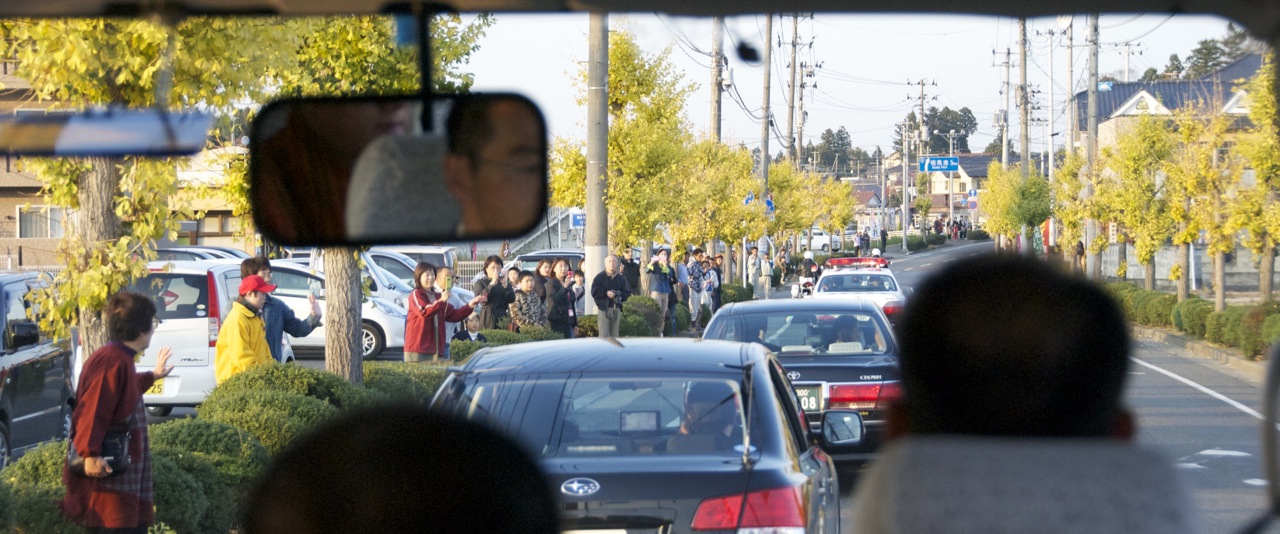
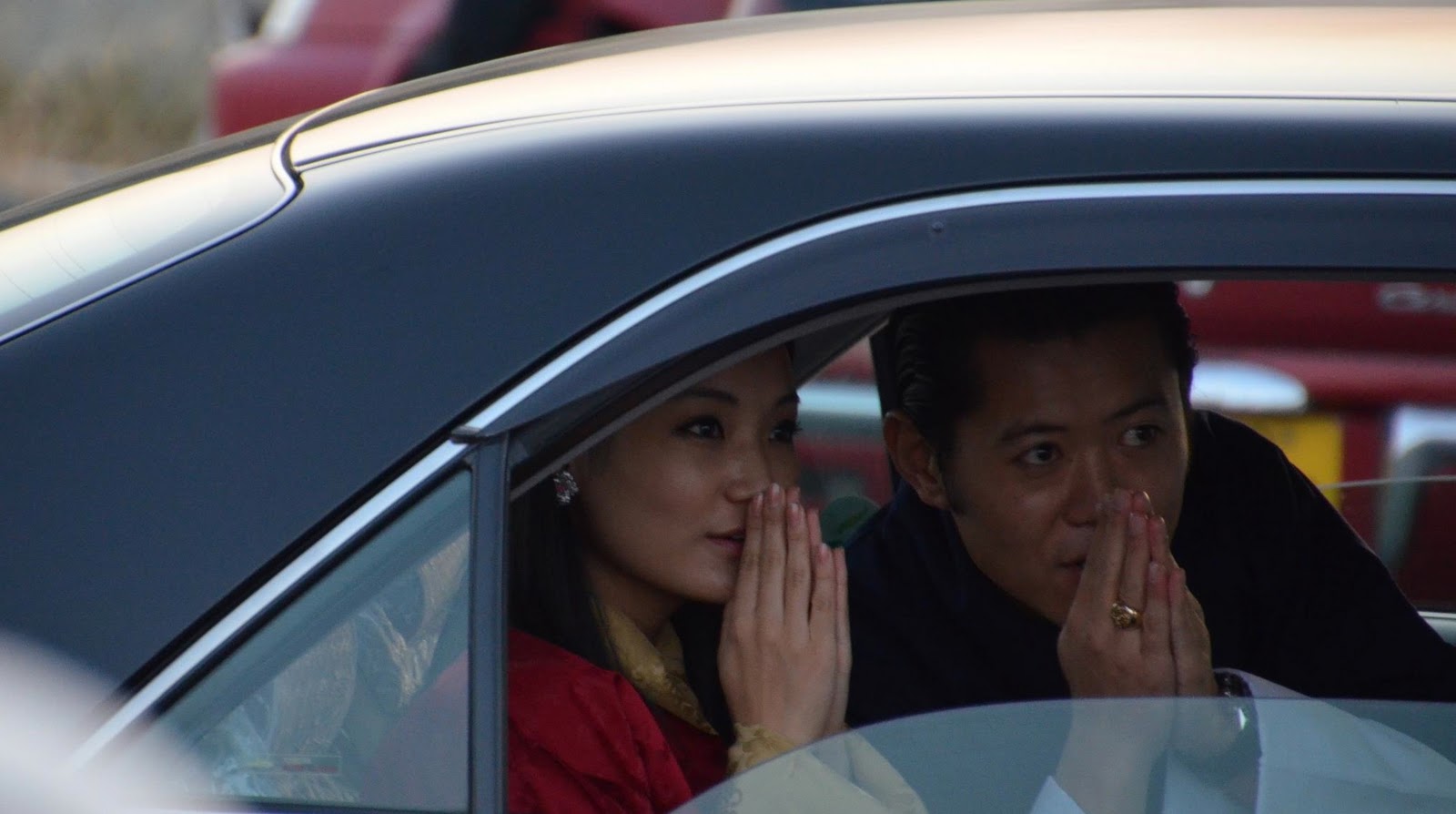
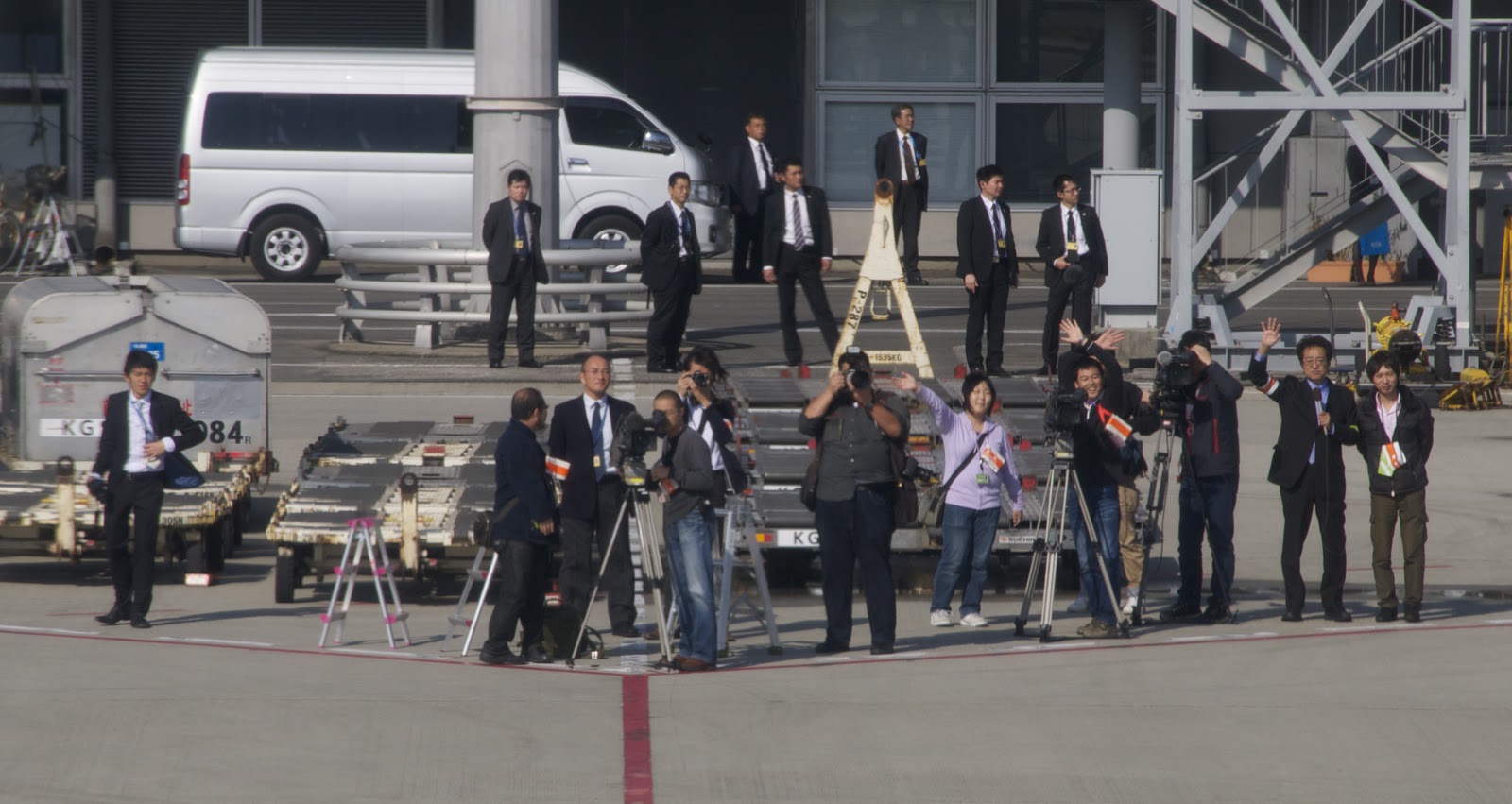
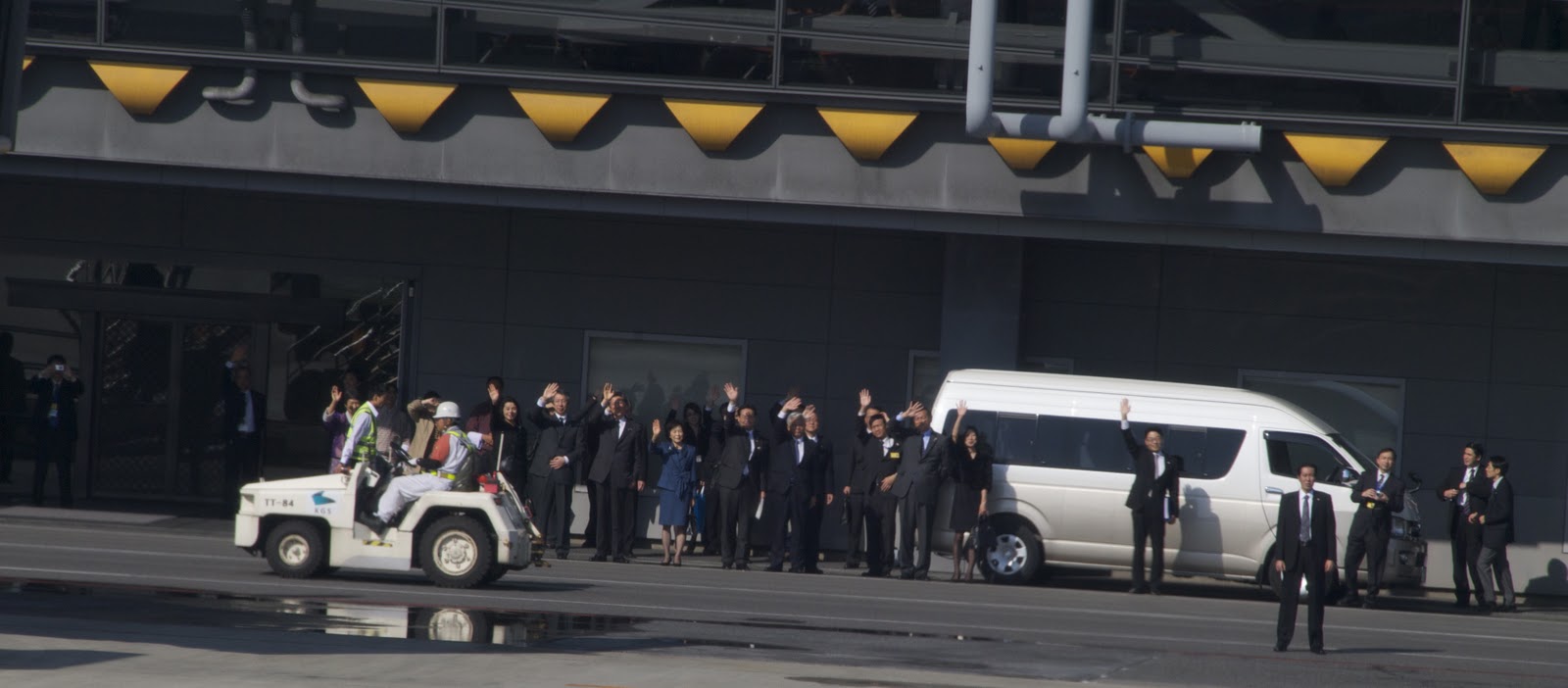
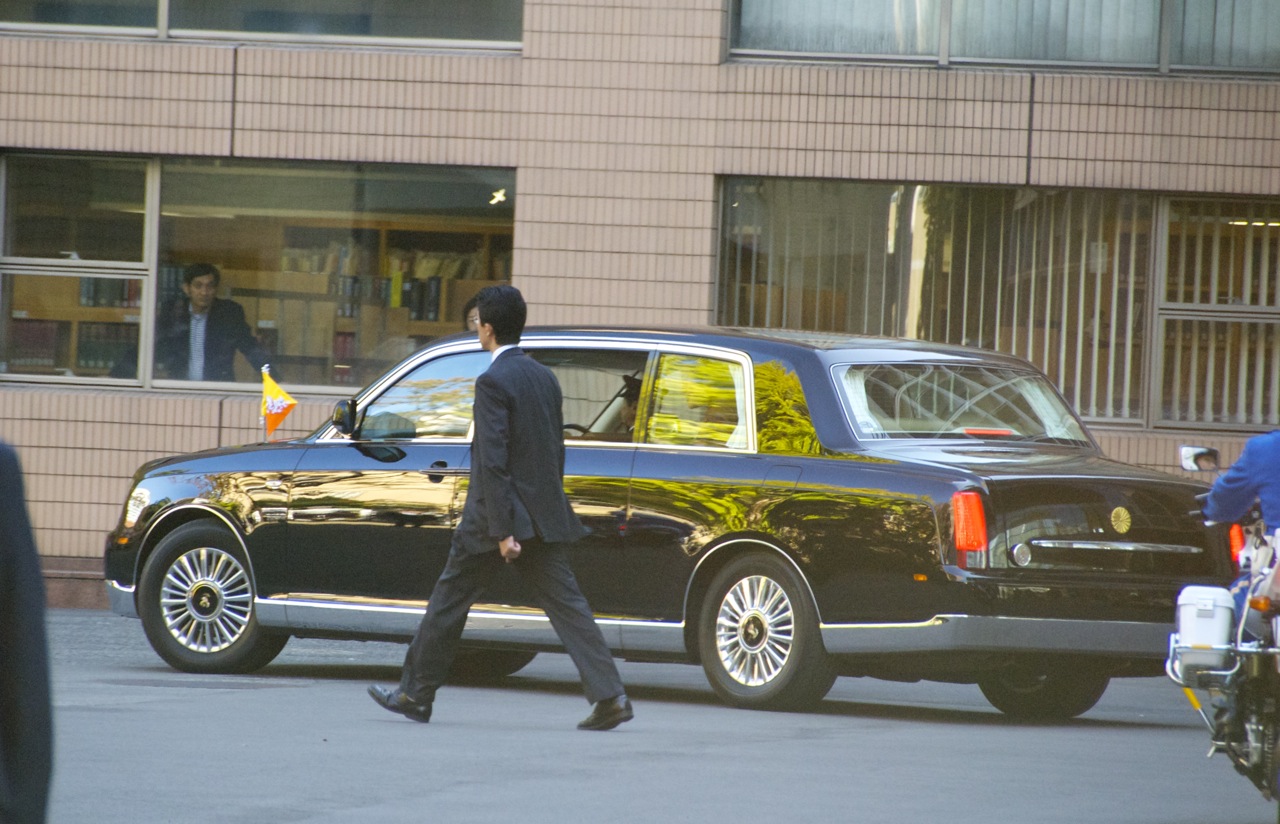
The Imperial Family sent a car from their fleet for the Royal Couple. Among all arrangements, the security detail was impressive (but what is not impressive about Japanese way of doing things). They were there to protect the VVIP at any cost.


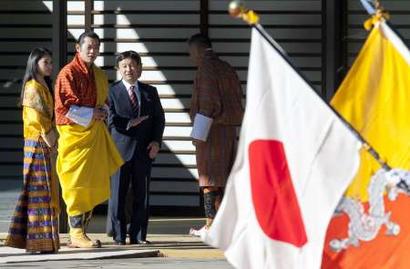
Japanese Emperor Akihito was not well. So His Imperial Highness Crown Prince Naruhito stood in for the Emperor. Crown Prince Naruhito had visited Bhutan in 1987 and says he "has fond memories." 
(photo source - Reuters)


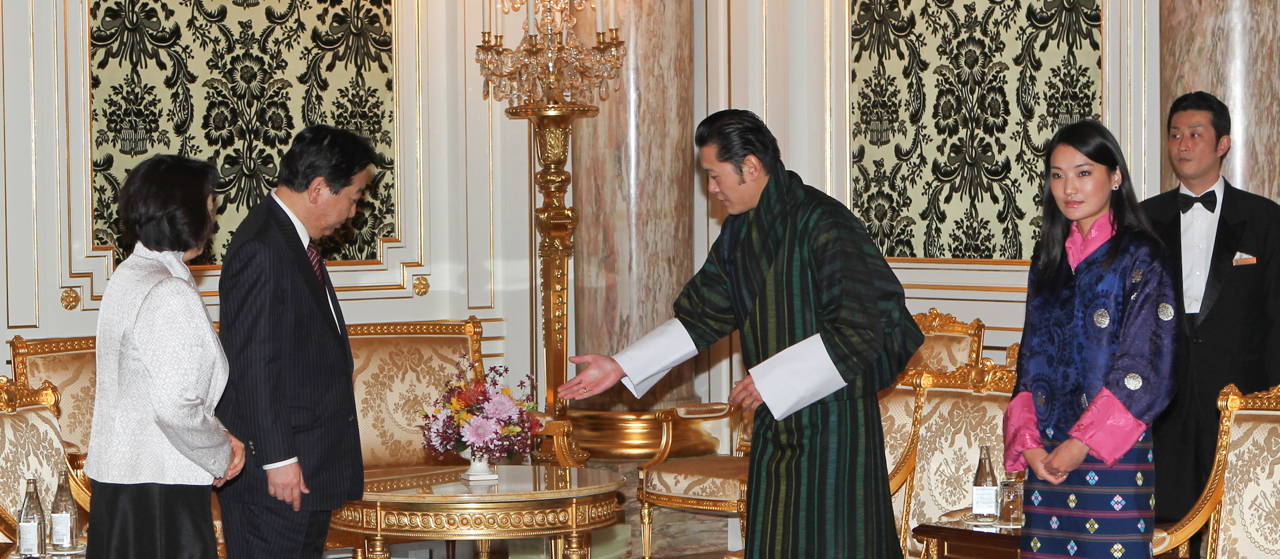
Japanese Prime Minister Noda called on His Majesty the King on the day the King arrived in Tokyo.  The PM had also just flown in from the APEC Summit in Honolulu


In an unprecedented move, perhaps defying the standard protocol, the Empress called on His Majesty at the place where the King was staying.


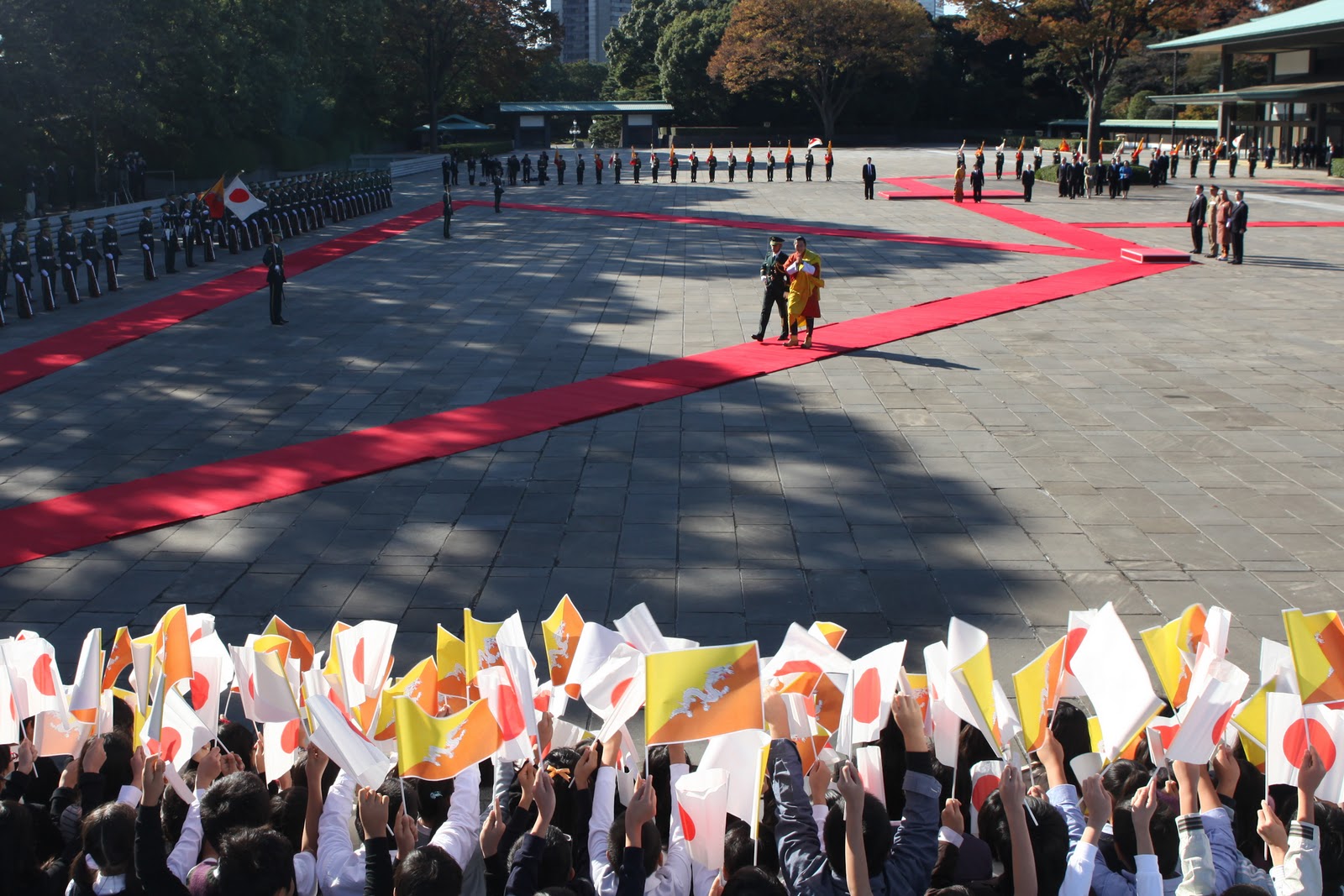
His Majesty the King greeting the children at the Welcoming Ceremony (Imperial Palace)


The photo that moved a nation.  At the Guard of Honour in the Imperial Palace, His Majesty pays homage to Bhutan - Japan friendship by bowing down to the two flags.  This scene made every Bhutanese proud and every Japanese totally moved.  
(photo courtesy - Reuters)


The guard of honour was simply impressive and emotional at the same time. Listening to the National Anthem in a foreign land always brings tears in my eyes. Here it was even more. A superpower honouring our small nation and and our king was simply marvelous. 
(photo source - Reuters)


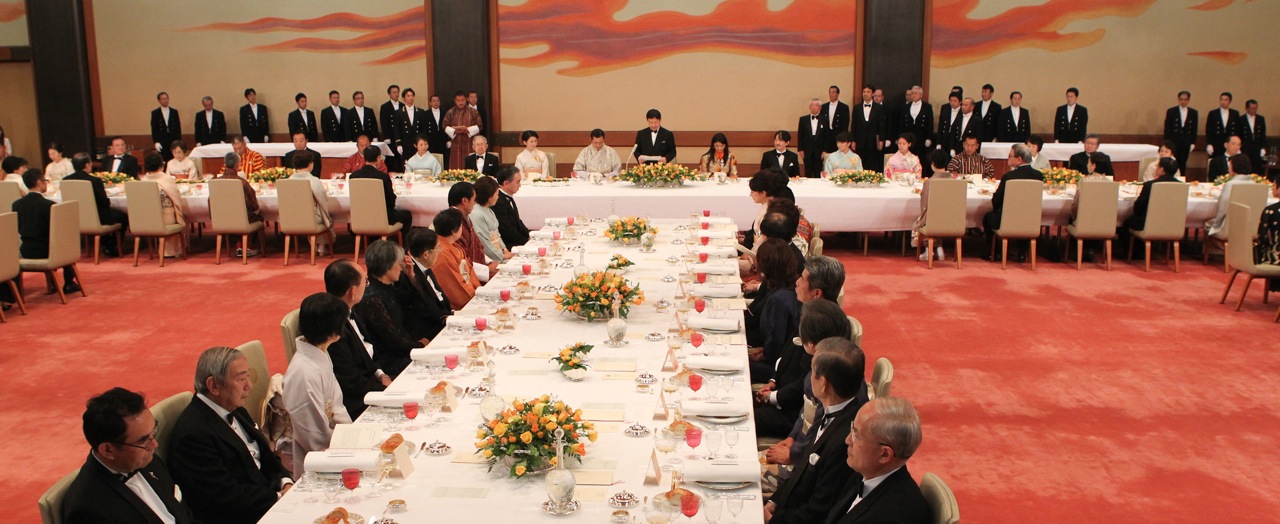
The State Banquet in honour of His Majesty the King and Her Majesty the Queen. I sat next to Honorary Consul to Bhutan, Hitomi Tokuda and the beautiful wife of trade minister Yukio Edano. Edano is famous for his role as the cabinet secretary in the post March 11 disaster.  I also shared a wonderful joke with finance minister Jun Azumi. I also heard the most beautiful Bhutan's national anthem played here by the Imperial household orchestra.


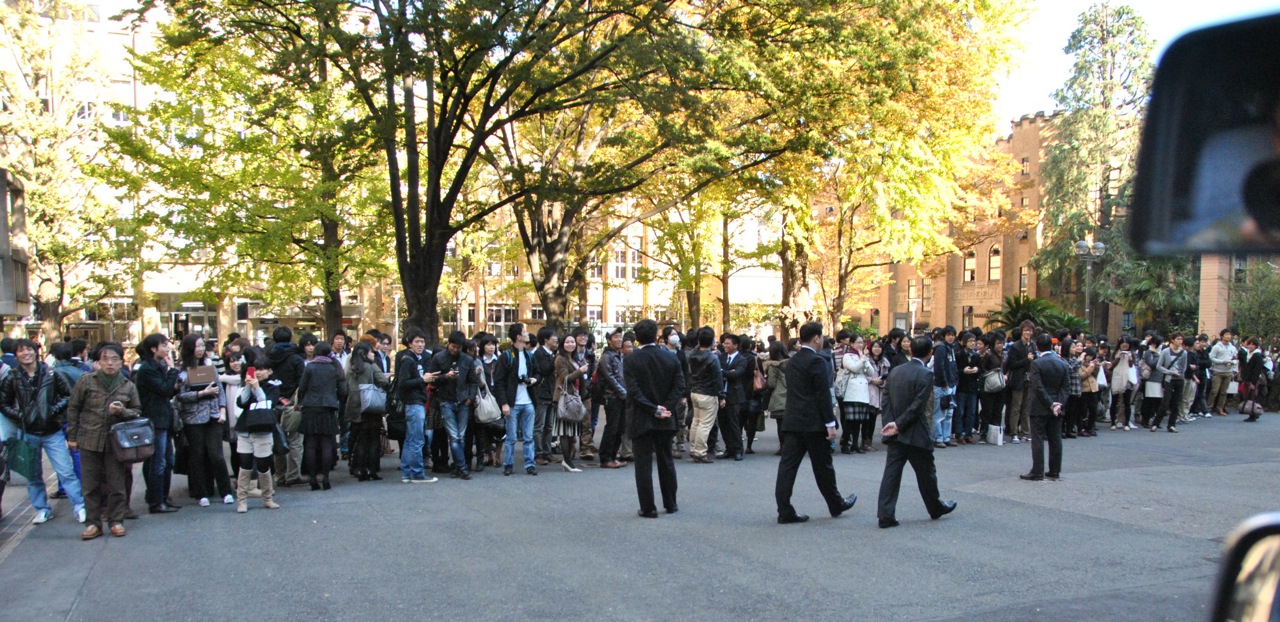
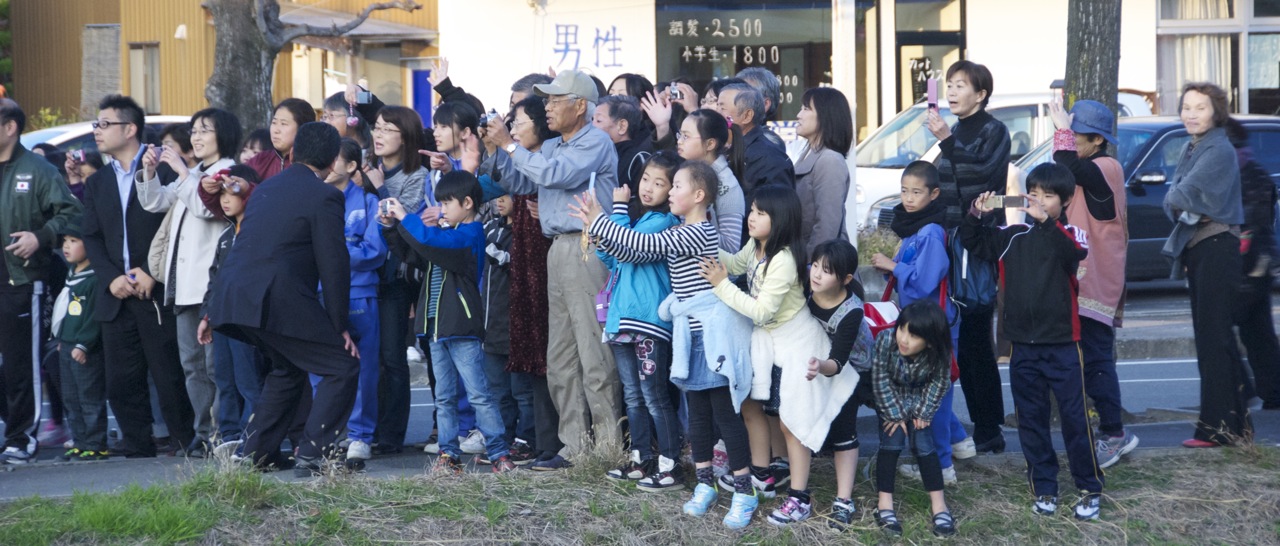
Fans and wellwishers wait for the King and Queen outside the Kieo University Hall.  Everywhere we went ordinary people and photographers became a part of the scene.


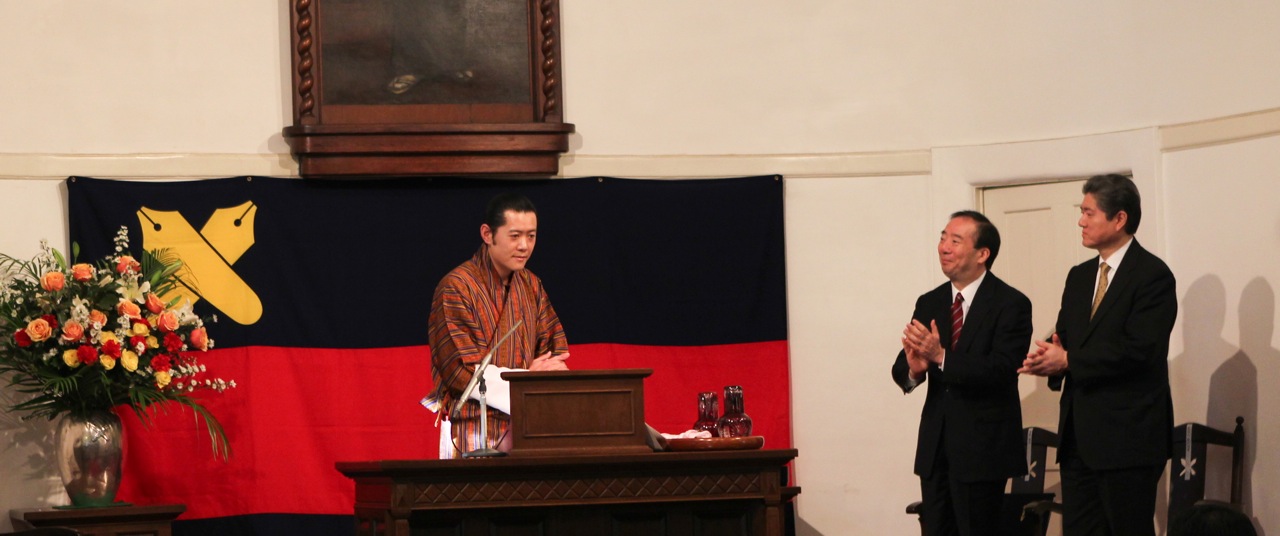
His Majesty receiving Honorary Doctorate in Economics from Kieo University. "Our generation is called upon to rethink, to redefine the true purpose of growth. And in doing so, to find a growth that is truly sustainable." The King said in his acceptance speech


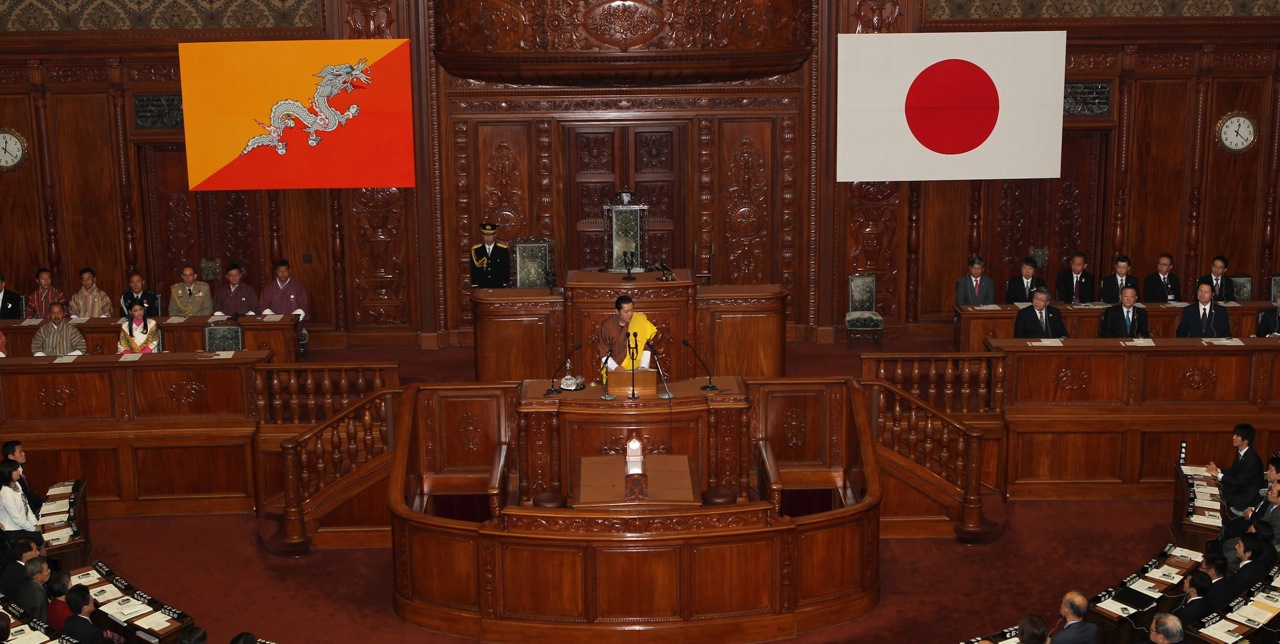
His Majesty addressing the joint session of parliament in Tokyo. His Majesty expressed his solidarity with the people affected by the earthquake and also supported Japan's aspiration as permanent member in the UN Security Council. "Bhutan not only believes in the need to expand the United Nations Security Council, we are convinced that Japan must play a leading role in it. You have our full commitment and support."  The Speech was televised live by NHK and webstreamed by the Diet secretariat. 


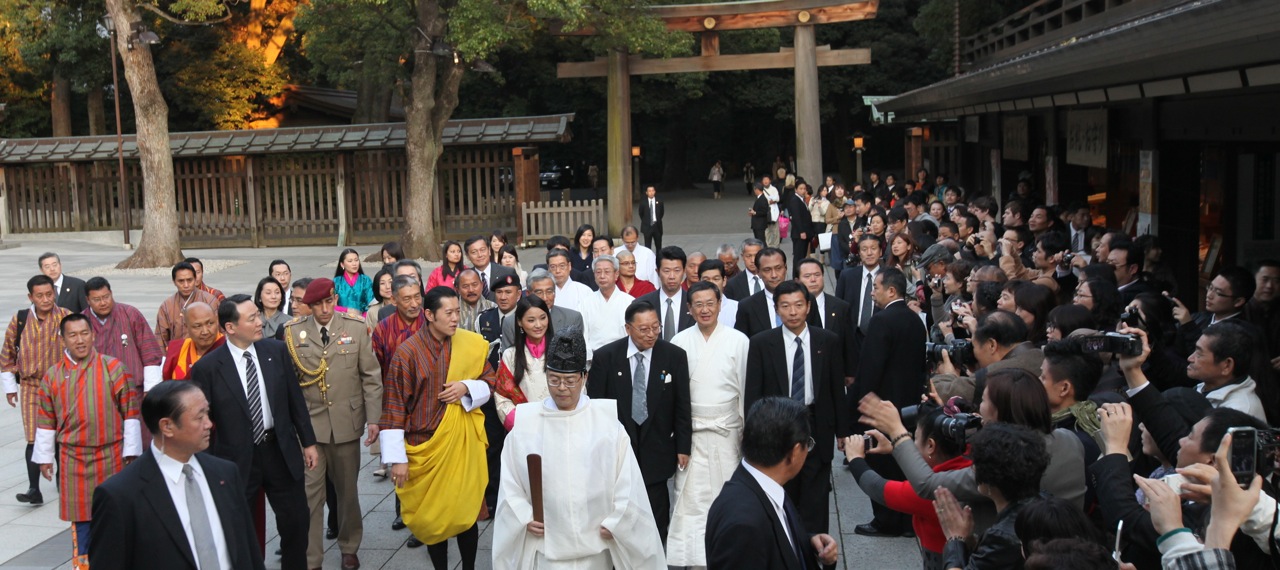
At Meiji Shrine. People as far as Kagoshima in South Japan were following the State Visit through newspapers, live TV reports and updates.


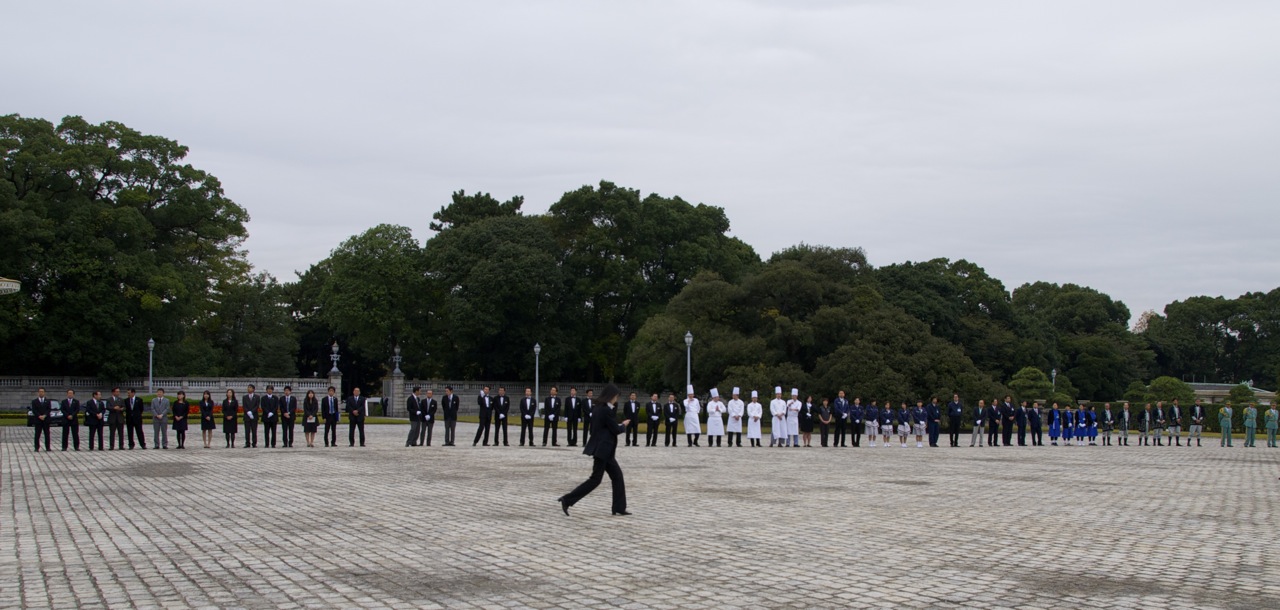
Butlers, chefs, cleaners and staff of Akasaka Palace, where the King was staying in Tokyo, line up to bid goodbye to the King and Queen 


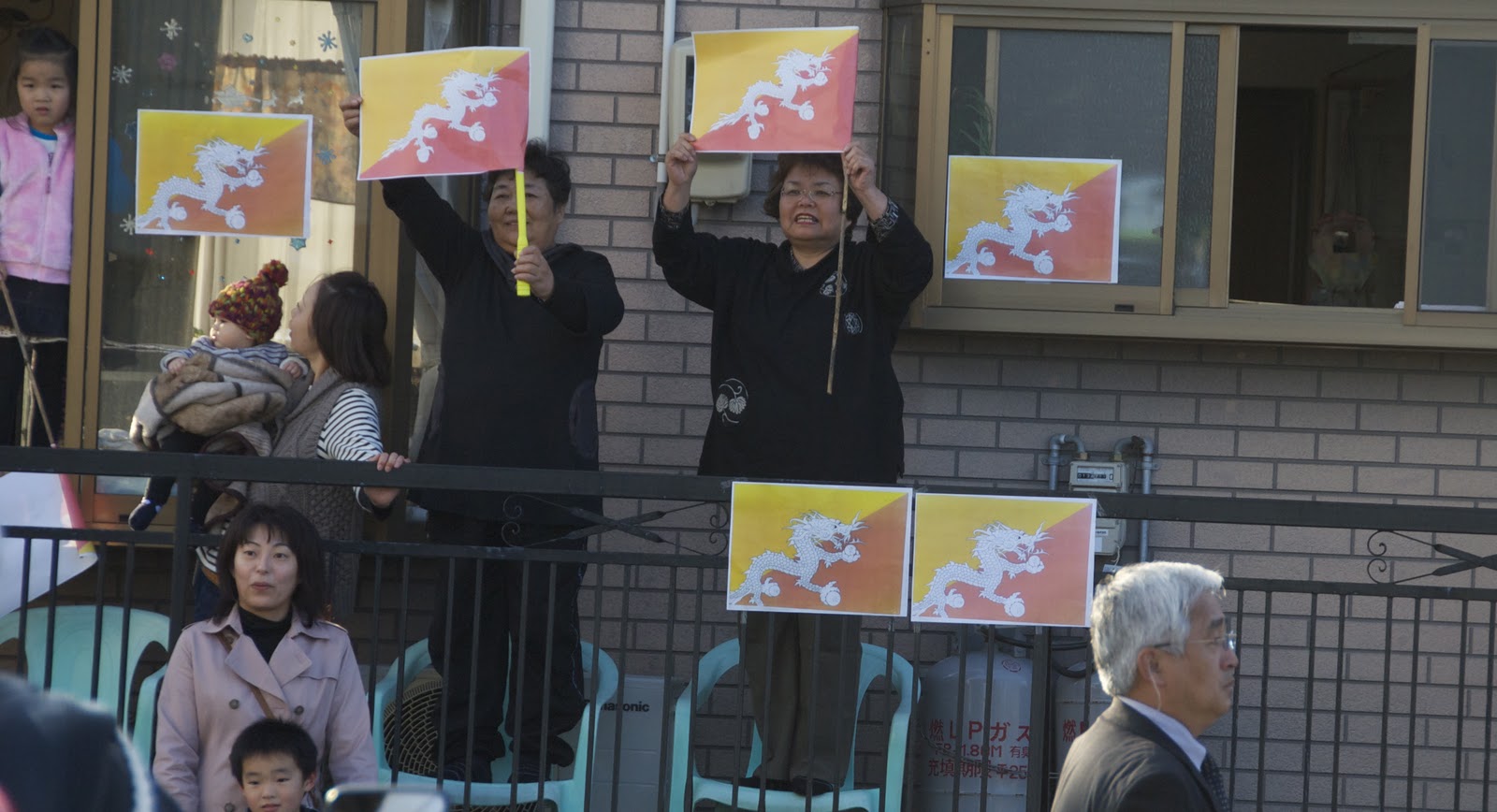
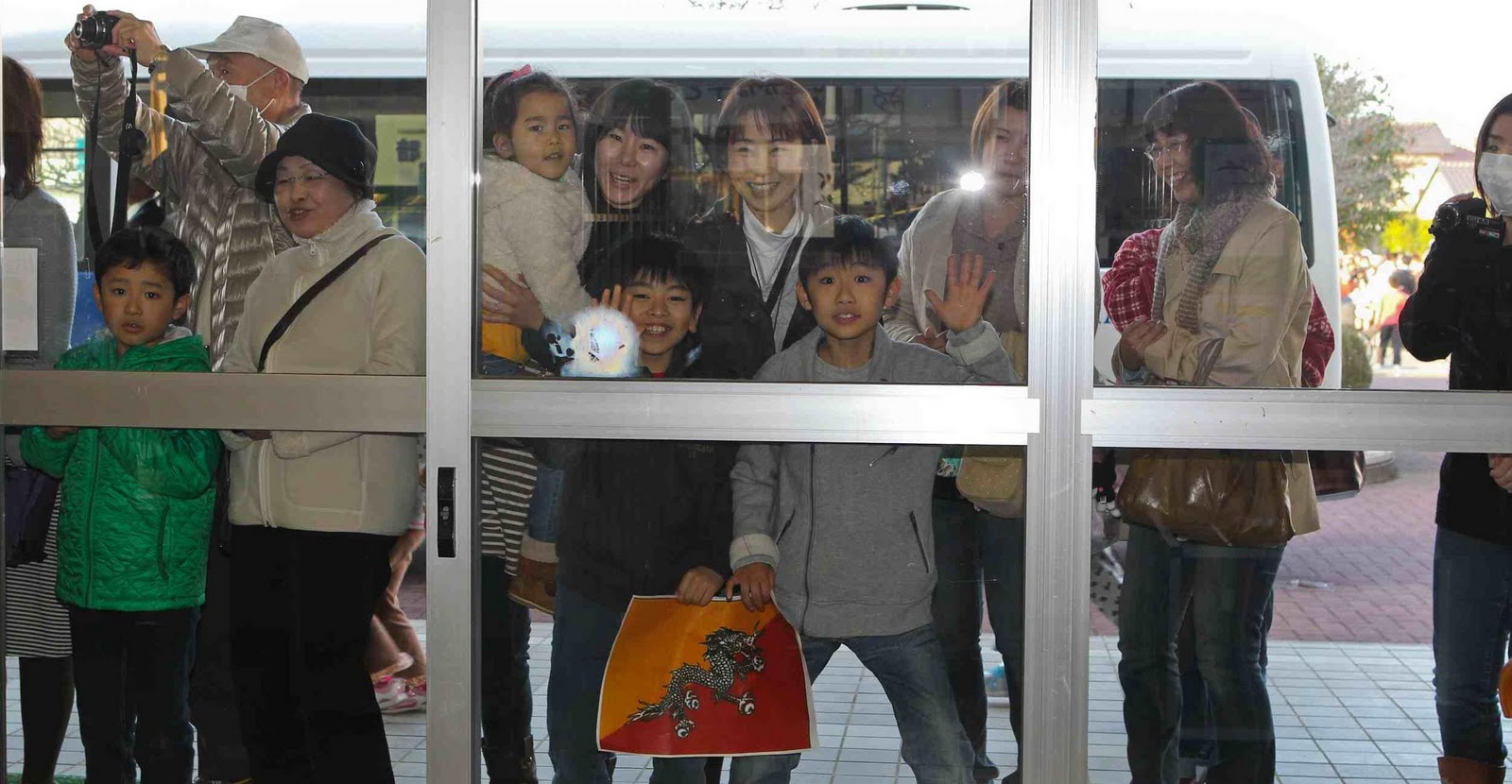
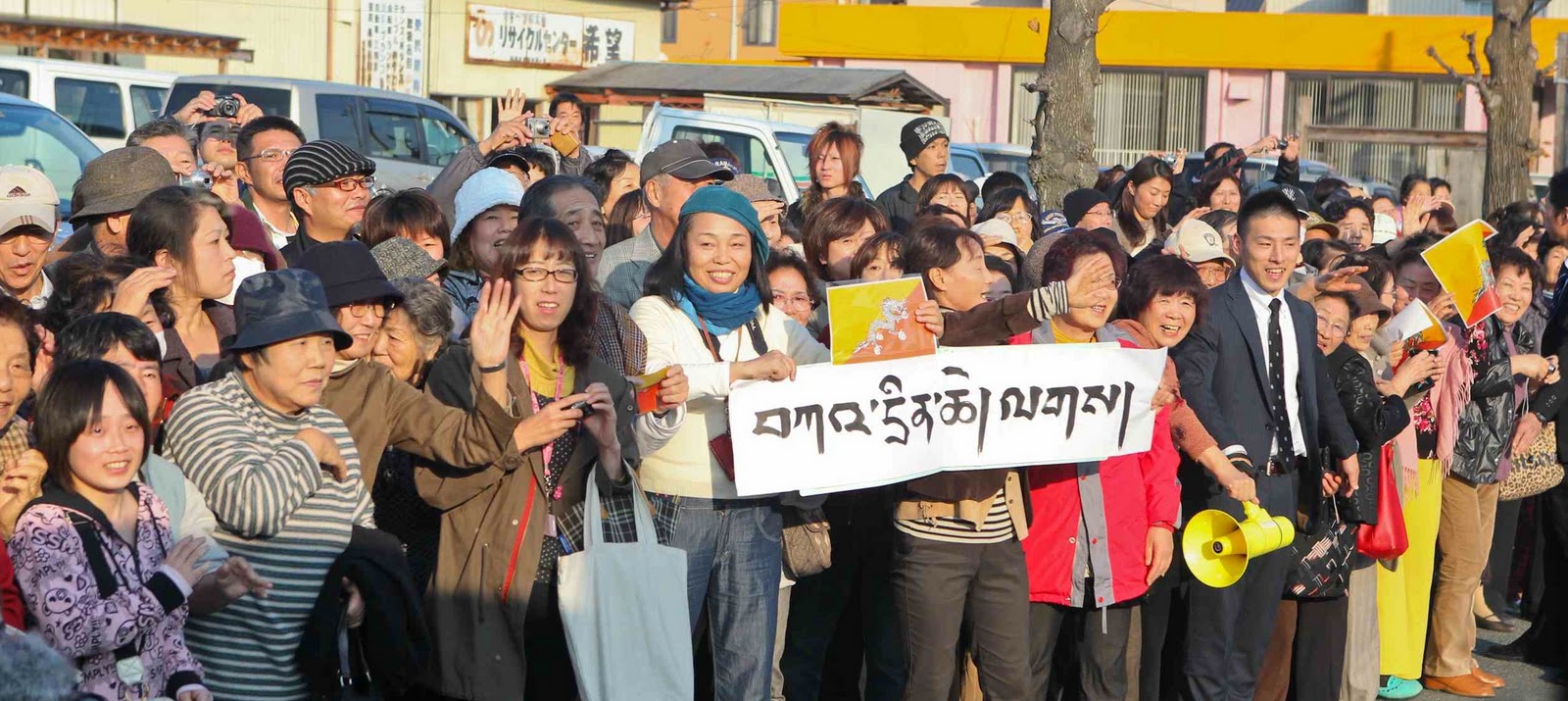
Inhabitants of Fukushima cheer the Royal Couple with Bhutan flag in response to King's much-appreciated gesture to visit the region. Someone wrote to me "HM's visit to Japan was like as if the real dragon showed up out of the blue clearing out the gloom and brought happy smiles to the Japanese people with the sun light after the storm."


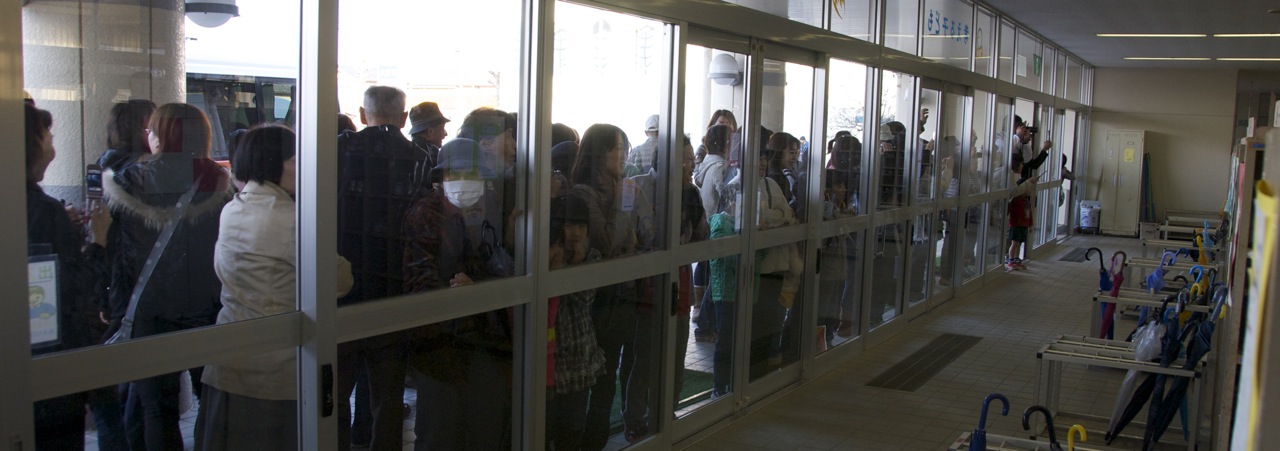
In Sakuragako School in Fukushima those who weren't invited wrapped the building making the Japanese security details quite nervous.  


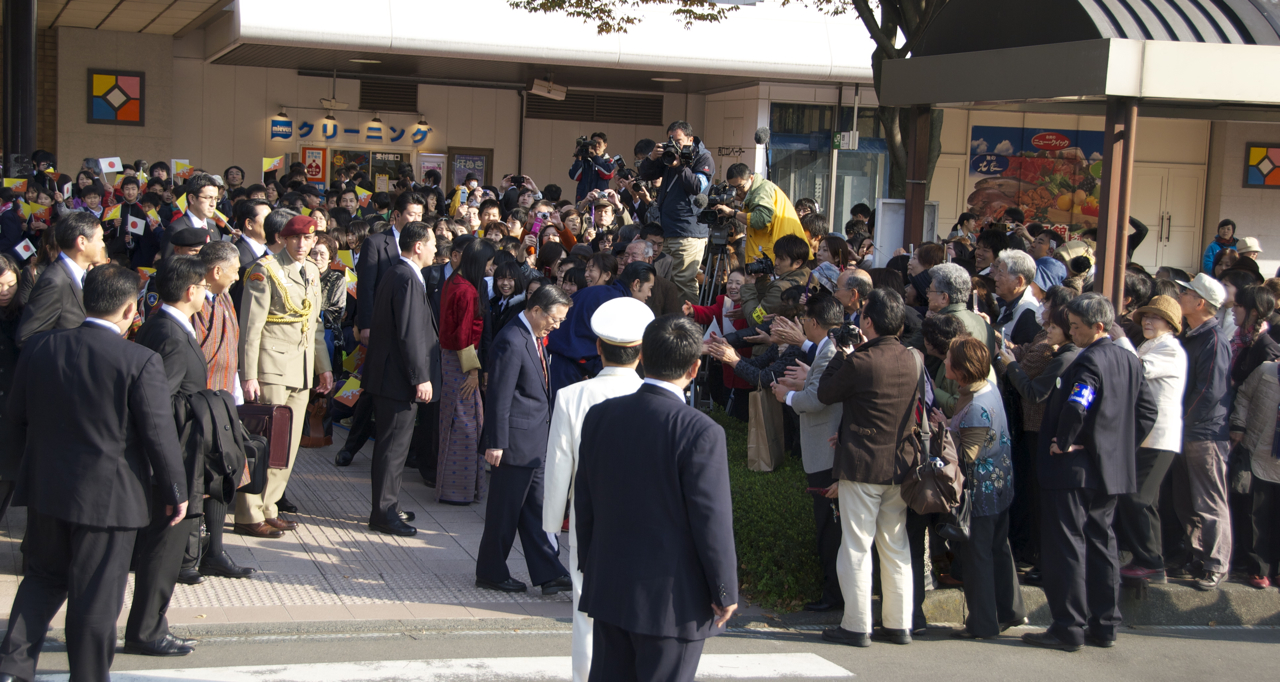
The Japanese security looked very nervous when His Majesty did what he love doing - dive into a crowd (photo courtesy - Yukio Tanaka) 


There were excitements, smiles, gratitude and curiosities all around 


Children and adults alike - all were either curious or touched by the royal presence in their locality.


People came out of their houses and work places and waived Bhutan flags all along the 100 km or so ride from Fukushima station to Soma Port. 


"Remember there is a dragon in each one of us," His Majesty told the children in Sakuragako School who also put up few cultural performances.


Hard evidence of a tragedy. A fishing boat still stands on top of a 20 meter wall.  At some point the tsunami reached 40 meters.


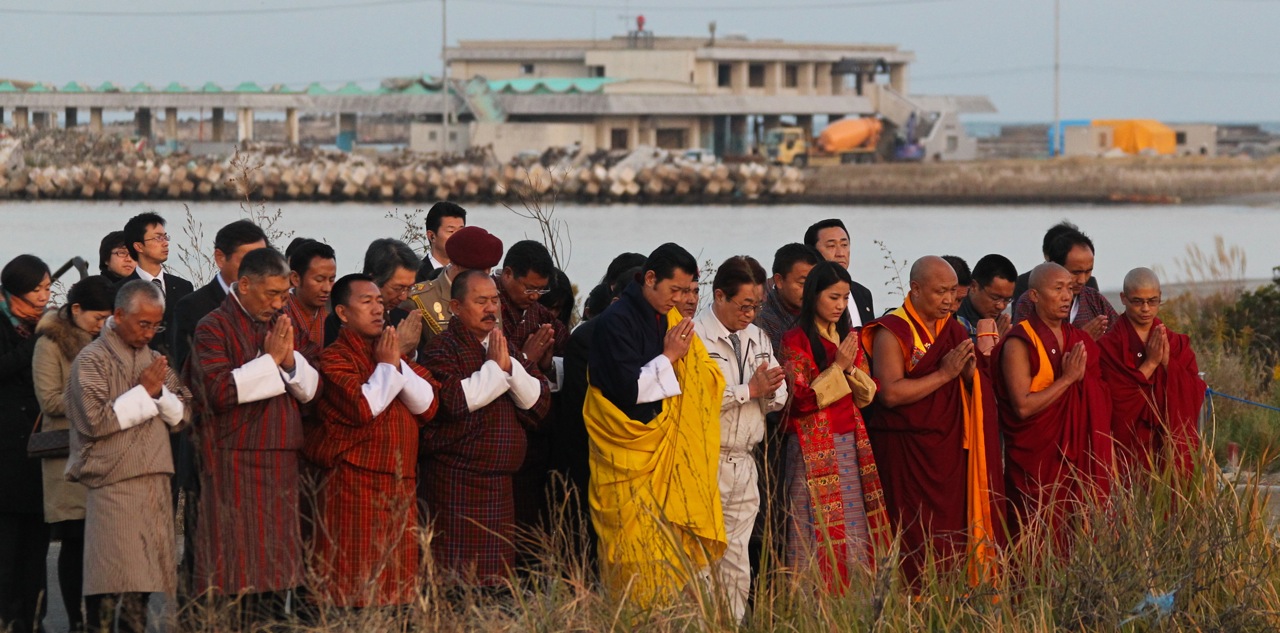
Soma City - Fukushima. His Majesty joins in for the prayer ceremony led by venerable Dorji Lopen - Bhutan's second highest monk. "No nation or people should ever have to experience such suffering. And yet if there is one nation who can rise stronger and greater from such adversity – it is Japan and her People. Of this I am confident." The King had told in his address to the Japanese parliament.


Many people came out with banners that read "Tashi Delek", "Joen pa legso" "kadrinche".  Some had even decorated their homes and gates. It was simply moving to see how much it meant to them


HM King and Queen thanking the people of Fukushima for love and affection and the unexpected warm reception(photo courtesy - Hiroko Kobori)

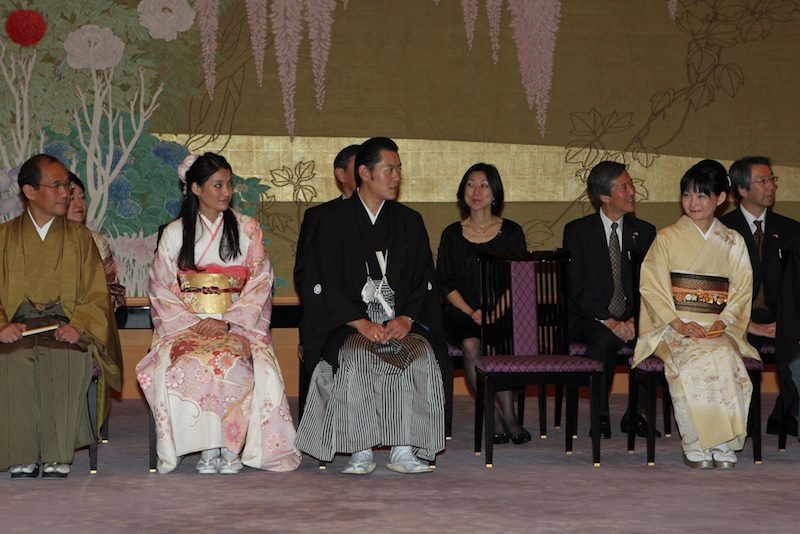
His Majesty and Her Majesty surprised the hosts in Kyoto by turning up at the Governor's banquet in hakama and kimono. One female journalist confided to me that she nearly fainted


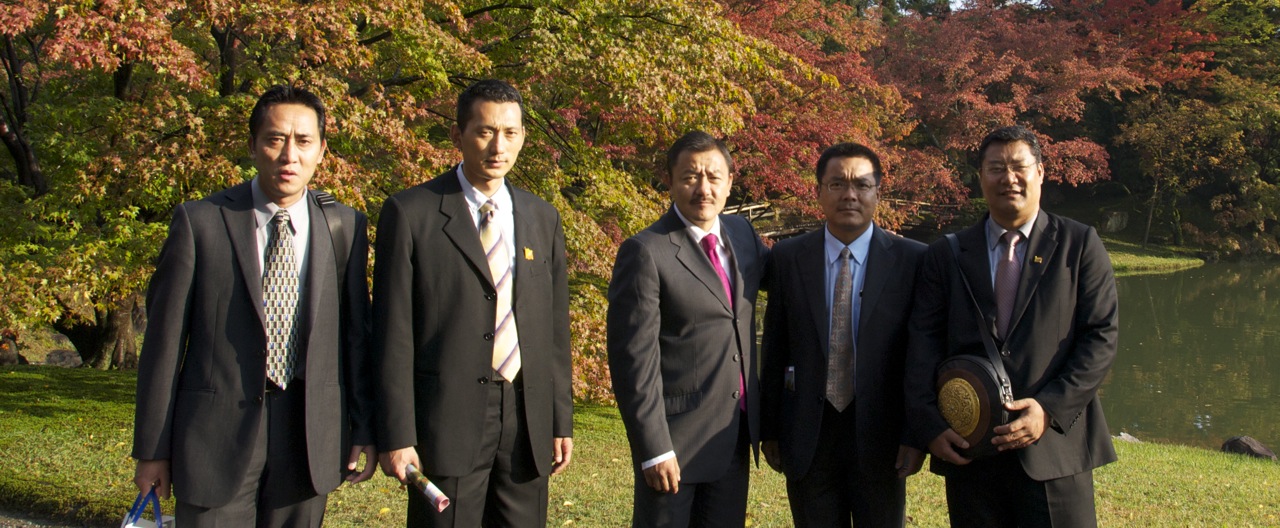
Men in Black. We wore our national dress throughout the Visit except on the day we left Japan.  It is almost rare that we have any pictures of ourselves from these tours. But we made exception for Japan. 


Some of the Japanese media covered the State Visit until the very end. We bid them farewell recognising deep in our hearts that they had done a great service to the relation between our two countries. 

The entire Japanese foreign ministry team joined the Kyoto Governor and stayed on and waived as His Majesty and Her Majesty waived back from the aircraft. There is no goodbye word in Dzongkha, our national language.  Only "see you again" and this really goes for this wonderful land and wonderful people.


Thursday, November 17, 2011

HM King of Bhutan addresses the National Diet of Japan, 17 Nov 2011

With my deep respects to His Majesty the Emperor, Her Majesty the Empress, and the People of Japan, I hereby accept with great humility this opportunity to address the Diet of the nation of Japan:

Your Excellency the Speaker of the House of Representatives,
Your Excellency the President of the House of Councilors,
Your Excellency the Prime Minister,
Excellencies, members of this august house,
Ladies and Gentlemen,

I stand here before you – a young man in the presence of great wisdom, experience and achievement - in an institution of such eminence and consequence in world history. There is little that I can say to be of much use to you. On the contrary, it is I who shall take away so much from this historic moment. For this I am grateful.

Jetsun, my wife, and I also thank you for the kind invitation to Japan only one month after our wedding, and for the warmth with which we have been received. This is an extraordinary gesture that reflects the generous spirit with which you support the long friendship between our two countries.

Your Excellencies, before I go any further – I must convey to you the prayers and good wishes of His Majesty Jigme Singye Wangchuck, the Government and people of Bhutan. The Bhutanese people have always held a strong affection for Japan and shared emotionally in the success of your great nation over the decades.

Following the devastating earthquake and tsunami in March it was deeply moving to see so many Bhutanese visit temples and monasteries around the country offering butter lamps, in their humble yet genuine efforts to provide comfort and support to the Japanese people. I, myself, remember watching the news of the tsunami unfold – sitting helpless and unable to do anything. I have waited ever since to be able to say to you – that I am deeply sorry for the pain and suffering of families who lost loved ones – for those who lost their livelihoods – for the young whose lives have been completely altered – for the nation of Japan that must rebuild life after such great disaster.

No nation or people should ever have to experience such suffering. And yet if there is one nation who can rise stronger and greater from such adversity – it is Japan and her People. Of this I am confident. On your path to rebuilding and restoring of lives, we the Bhutanese people stand with you – humble in our power to provide material assistance but heartfelt and true, in our friendship, solidarity and goodwill.

Your Excellencies, we, in Bhutan, have always thought of the Japanese people as our fellow brothers and sisters. Our two Peoples are united by our commitment to - family, integrity and honour; to placing the aspirations of the community and country before one’s own desires – to raising the common good above the self.

2011 is a special year in our relations – it marks the 25th anniversary of our diplomatic ties. Yet, the Bhutanese people have always had a special affection for Japan that goes beyond our formal ties. I know that my father and his generation watched with pride as Japan led Asia into the modern world decades ago – as you brought confidence and a sense of an Asian destiny to what was then a developing region – and as you inspired so many countries who have since followed Japan into the forefront of the world economy. Japan was and continues to be a leader. Even more so today – because in this globalized world Japan is an example of strength in technology and innovation, of hard work and commitment and of strong age-old values.

The world always identified Japan as a people of great honour, pride and discipline – a people with a proud tradition in history – who approach everything with tenacity, determination and a desire to excel – a people of unity in thought and action; of brotherhood and fraternity and unfailing strength and fortitude.

I must humbly state, that this is not a myth – this is a reality that was displayed in your response to the unfortunate economic recession of past years and to the natural disaster in March. You displayed the true qualities of Japan and her people. What would have shattered other nations and caused anarchy, chaos and lament - was met by the Japanese people with quiet dignity, confidence, discipline and strength of heart, even under the worst of circumstances. In our present world, this combination of excellence – with strong roots of culture, tradition and values – is almost impossible to find. Every nation aspires to it - yet it is an integral aspect of Japanese character. These values and qualities were not born yesterday – but were born from centuries of history. They will not disappear in a few years or decades. What a great future lies ahead for a Japan that possesses such strength.

For this strength has seen Japan rise again and again, throughout history, from every setback to its status as one of the most successful nations in the world. And even more remarkable is the manner in which Japan has always, without hesitation, shared her success with people in all corners of the world.

Your Excellencies, I speak from the heart, and on behalf of all Bhutanese. I am no expert or academic – just a simple man with a deep affection for Japan.

All I am saying is that this world will benefit immensely from a Japan that defines excellence and innovation; from a Japanese people of great determination and achievement yet quiet dignity and humility; from a nation that other countries can look to as an example. And as Japan leads Asia and the world – as Japan’s presence in world affairs reflects the great achievements and history of the Japanese people, Bhutan will cheer and support you. Bhutan not only believes in the need to expand the United Nations Security Council, we are convinced that Japan must play a leading role in it. You have our full commitment and support.

Bhutan is but a small Himalayan nation of about 700,000 people. The country's enchanting physical characteristics coupled with a richly compelling history defines every fiber of the Bhutanese character. It is a beautiful country and in spite of its geographical size across the length and breadth of its varied topography lie scattered, numerous temples, monasteries and forts, reflecting the spirituality of generations of Bhutanese. Our environment remains pristine and our culture and traditions, strong and vibrant. Bhutanese continue to live lives of simplicity and modesty that foster a deep sense of harmony among our people, as we have done so for centuries.

Today, in this fast changing world, I'm most proud of the manner in which we live in a caring society where our people value harmony above all - where our youth have exceptional talent, courage and grace and are guided by the values of their forefathers. Our nation is in the able hands of our young Bhutanese. We are a youthful, modern nation with age-old values. A small beautiful country – but a strong nation too.

Thus, Japan’s role in the growth and development of Bhutan is therefore very special. You have not only provided valuable aid and assistance but also been the source of strength and encouragement as we strive to fulfill our unique aspirations. Your generosity of spirit and the higher, greater natural bond between our two peoples that is un-definable and yet so deep and spiritual - ensures that Japan will always have a friend in Bhutan.

Japan has been one of the most important development partners for Bhutan. Therefore, I am very happy to be able to thank the government and the people of Japan who personally lived in Bhutan and worked with us, for your steadfast support and goodwill for our Bhutanese people. I hereby pledge that it shall be my constant endeavor to further strengthen and deepen the bonds between our two people. Once again I convey the prayers and good wishes of the People of Bhutan to the People of Japan.

With Your Excellency’s permission, I would like to say a prayer in my own language – “May Their Majesties the Emperor and Empress enjoy good health and happiness. And may the sun of peace, security and prosperity forever shine on the beautiful Nation and People of Japan.”

Thank you, Your Excellencies!
State Banquet Address of His Majesty the King in Japan, Tokyo


First of all, may I convey my deep respects to His Majesty the Emperor and Her Majesty the Empress.

Your Imperial Highness the Crown Prince,
Your Imperial Highnesses,
Members of the Imperial Family,
Your Excellencies,
Ladies and Gentlemen,

My wife, Jetsun and I are deeply grateful for the kindness and warmth Their Majesties have accorded to us. We are deeply humbled. As a young man, I must say, that the only way I can accept such generosity, is to do so on behalf of the people of Bhutan, whose love and affection for Japan is unique. I have always believed that the Japanese and Bhutanese people share something that is unexplainable yet deep and profound, something that transcends our day-to-day interactions, and even our histories. I have always seen this in the way my people speak so affectionately of Japan without ever having been to Japan. And then I saw it in the outpouring of support for Japan in March, with people from all over Bhutan visiting temples and monasteries to pray for those affected by the earthquake and tsunami. Your Imperial Highness, our people share a special bond.

Therefore, I respectfully accept the kindness and generosity of Their Majesties and the People of Japan towards me, as a tribute to the spirit of solidarity and goodwill with which the People of Bhutan embrace Japan and her People.

I would like to convey the prayers and good wishes of my father for Their Majesties and the Imperial Family. In doing so, I take the opportunity to acknowledge the pivotal role played by the personal bond between Their Majesties, Your Imperial Highness the Crown Prince and my father, in furthering the warm friendship between our two countries.

Personally, I have to say that it is a special honour and happiness being here upon the invitation of Their Majesties so soon after our wedding. For, it is to Their Majesties that Jetsun and I will always look for inspiration and guidance during the course of our life together, and as we serve our nation.

I would like to raise a toast to the good health and happiness of Their Majesties and to the peace, progress and prosperity of the People of Japan.


Sunday, November 13, 2011

Letter from Tokyo


HM Fourth King and the Emperor
Simple gestures can move the world. This is what seemed to have happened when Fourth King of Bhutan, His Majesty King Jigme Singye Wangchuck visited Japan to attend the funeral of Showa Emperor in February of 1989.

According my friends and people I talked to, that day was misty and cold – almost freezing. US president Bush (the senior), French President Mitterrand, Prince Charles etc. were all there heavily dressed, furred and well-covered. Our King was there too but with our knee-length gho.  No gloves, no hats, no mufflers or anything - besides our simple gho.  The world leaders were all seated on the VVIP stand besides the Showa emperor’s body that lay-in-state.

As the leaders were called upon, one by one, to pay their respect in front of the casket, they got up, paid homage and immediately left after doing that. The cold, I guess, was unbearable.  But the King returned to his seat. And was the only one to do that.  He sat there braving the cold in the most dignified manner - for hours till the ceremony was over.

The NHK camera, that was giving live telecast of the event to the world, kept zooming back on him. And the whole country was amazed and kept asking, kare wa darey deska? (who is he) Soon they found out, as the commentator introduced him as the King of Bhutan.  This simple gesture moved a nation - already in grief.  23 years laters people still talk about it vividly.  It has procured immense goodwill that continues to genuinely bond the Japanese and the Bhutanese people - no matter where they are or what they do. 

We often think that one has to carry out extraordinary deeds to be noticed or to change the world. Wrong. Listening to this story over and over again here in Tokyo from different sources, I couldn’t help thinking about how fortunate we were to have had a King like him. 

His Majesty just turned 56 - day before yesterday. May the heavens shower him with good health so that he continue to inspire us and touch more lives and hearts in a world that is increasingly becoming nonsensical.


(At the time of writing this article, the Japanese people are waiting with great excitements the visit to Japan of His Majesty the King Jigme Khesar Namgyel Wangchuck and Queen Jetsun.  His Majesty's gesture following the Japan earthquake, the royal wedding and the discovery of a new butterfly species in Bhutan by Japanese researchers are already making rounds)

Friday, September 23, 2011

Kin of the jungle


Village of Pam as seen from Yonphola airfield
It was nice to be back to Tashigang - back to one's roots. I was born in Tongling but spent much of my childhood in Pam, a settlement some 4 km away from the town.  And precisely, I grew up among the forests and rivers between Tashigang and Kanglung. That was because a series of natural calamities hit our family home (we lost two houses within a span of few years) and so we were sort of ostracised. My grandfather, then, built a small hut away from the main village, almost in the wilderness.

Life was hard though. No electricity, no running water. My school holidays were spent either looking after cows or chasing monkeys from our maize fields. I preferred fighting off the monkeys. They rarely showed up and so I got lots of time for myself, which I spent reading comic books.  I would have stocked myself well from Jaigaon on my way home from the boarding school.

Looking after cows was not too bad either, except that quite often I would be too engrossed in comics and the cattle would stray into someone's property. Among the neighbours I used to really dread was a certain Pradhan.  He was actually working for an affluent neighbour but was so dedicated to his job that, let alone my cows destroy his crops, he wouldn't even let us enter his sokshing (private forest) to collect leaf litters.

But boys are boys and one of our favourite past times was to outsmart Pradhan and outrun him if he came chasing. Not only would we enter his sokshing, we would also try hit his orange orchard. If he had ever caught us, we were doomed. But we loved serious adventures.

Looking after cows left me with some valuable skills too.  I learnt to read footprints of animals and differentiate new marks from the old. I could climb trees and overcome the fear of heights - a skill that came handy later in life when as a young engineer I lead the installation teams on tall radio towers. I also became immune to insects bites and leeches. I learnt to swim in rivers and look for fruits and food from the forest.  However, quite often I was not able to regroup the cattle by dusk and my grandpa was so strict that I had to keep looking - dead into the night.

Something I really hated was fetching water. The nearest source was exactly at a distance of one kilometre. And you had to walk under the scorching Sun. Someone had to keep going for the whole day and some times it was unfortunately me.

And there I was, after over thirty years, traveling in the royal entourage in the East. A bit of nostalgia overpowered me as I scanned the mountains, rivers and the forest I had known as a child. The memory was stronger of people I had lost - like my late mother and more vividly of my cousin who passed away the other week. They were but painful reminders of our ultimate journey.

Nice coincidence do happen still. On our way back from Kanglung I was far behind the convoy and my car broke down just as we were passing through my village. My driver and I tried to restart the engine but we were not too successful.  After several attempts, we gave up and dialled for help. For some strange reason, I decided to leave our car and walk towards Tashigang as someone headed from there to pick us up.  It was pitch dark and it was raining. I should have been upset. But instead I was smiling. I just realised that the little mishap had actually managed to turn back the clock for me. I was where I belonged and touching my roots.  For a brief moment I felt that I was doing what I used to as a child - walking in the dark in my native village.  It seems time had stood still.  Whatever greater things you may achieve in life, you tend to miss what is long gone away from you. That, I guess, is human. 

Who says time and tide wait for no man. They do.  At least for an imaginary and blissful moment.

Friday, September 2, 2011

The Other Paro

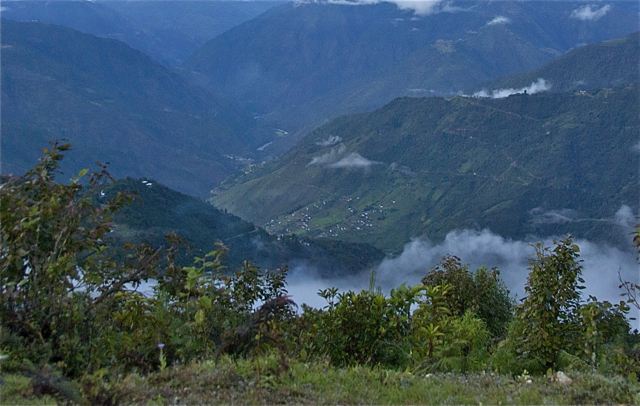
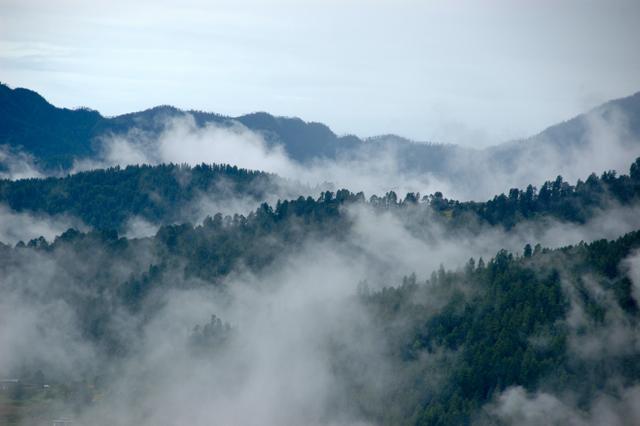
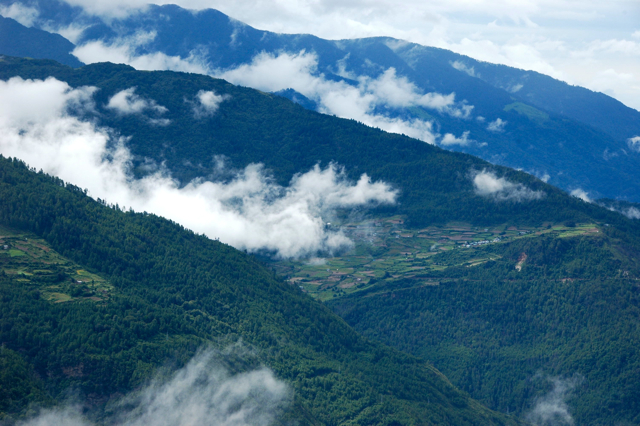
Everyone sees Paro from one angle.  Here is what you get from the top of Jabji peak.  It is probably the view that the pilots of Druk Air sees from their cockpits.


Wednesday, August 31, 2011

Keep Talking. This is democracy

I happened to be in Delhi through out the Anna Hazare saga. The usual summer heat was not too bad but what was really heating up the city was the protest against graft and corruption led by this unassuming man - Anna Hazare.  Public protest is a part of democracy. It is how eventually a common guy makes himself heard.  What bothered me was the manner in which this particular protest was conducted. Although one must appreciate the fact this was a non-violent movement and remained so throughout and everywhere in India.

Bhutan is an emerging democracy.  Meaning western-styled democracy is just being introduced in full scale from 2008.  And we did that voluntarily with the sole intent that we would be able to benefit from its positive aspects - such as people’s active participation in governance, democratic principles and values. What we hope won’t happen is that someone has to fast to make himself heard. It may be necessary in a country of a billion people.  According to a journalist I know, “It is the beauty of the Indian democracy”. May be but I wouldn’t augur that in Bhutan. And in a country where half of the population is related to you and the other half to your wife, it may not be necessary either.  Which makes me conclude then that the only other way is through serious debates and consultations.

Public discourses, dialogues and even dissents are essential parts of democracy. They enable people to think more, work harder and distill the ideas better before a final decision is taken, or a good opinion formed. However, the sad reality is that the culture of debate and dissents are almost alien to us.  And this is ironic.  Because within the walls of our age-old monasteries debates were conducted and in many cases they constituted the final ticket towards graduation from the seats of higher learning.  Even among the illiterate world of farmers and rural communities, village meetings are common and decisions are taken as a group after thorough discussions.

It is therefore a paradox as to how within the so-called educated elite there is hardly any good debate or discussion on any issue? Save for the media, there is no public space where one can express views or share ideas.  And on the other hand if one does in a public or official setting, people draw simplistic conclusions and make petty minded comments.  People simply cannot differentiate between personality and post of a person.  Out in the cyberspace, the online discussion forums, fueled by the benefits of anonymity, are dumping grounds for triviality and character assassinations. 

People point fingers at the system for not encouraging the culture of debate. And yet even in the pre-2008 era the highest authority initiated, introduced and institutionalized consultations.  The National Assembly was both the highest legislative and consultative body.  Lower down were the Dzongkhag Yargye Tshogdus and Gewog Yargye Tshogchungs that were initiated by Fourth Druk Gyalpo.  In recent times, our monarchs have traveled length and breath of the country to discuss five-year plans and the draft Constitution.

As we nurture our nascent democracy into adulthood it is imperative that the culture of debate and dissents are promoted and well imbedded. We need to sit face-to-face and talk. At all levels, on all issues.  We need to listen too and where there is the need to compromise, we should – as long as it is in the broader interest.  As much as the size of our country is to our advantage if we want to make that happen, our small nation will not be able to absorb the Anna Hazare styles of protests or UK types of mass riots.  The challenge for this generation therefore would be to create a democracy without the imprints, or the needs, of such ugly practices.

Wednesday, August 24, 2011

His Majesty's Address at the Graduates’ Orientation Program, 23 August, 2011

“This is Jetsun Pema. We will be married soon. When the third King was Paro Penlop, he married in Ugyen Pelri and Paro dzong on the 1st of October. My father married on the 31st of October 1988 in Punakha. So I decided to set my date on the 13th of October. I have known Jetsun for many years. We will, as you all know, serve you and the country throughout our lives. I am happy to introduce you to her today.

Now, as we gather together today, I want to use this opportunity most effectively.   I know you are all aware of most of the things I am going to say. Nonetheless, it is with the hope that it might be of benefit to you that I will state these things again. If you have questions, feel free to ask.

At this profound moment in your lives, standing poised to begin your careers, you carry the weight of your parents and your families’ pride and hopes in you. From me, you have my good wishes, my faith and trust and above all, my happiness in your success until today.

Today, I want you to reflect on the blessing of being born in Bhutan. I have travelled across the country and am truly amazed at the beauty and spirituality of our nation. It is a jewel born from Guru Rimpoche’s blessings.

Fundamental to the strength and beauty of our nation is our cultural heritage – our traditions and customs - the bond between children and their parents, teachers and elders. The trust and faith among friends, neighbours and the community. These are unwritten and unspoken values passed from generation to generation for centuries. These values are inherent in all of us. Yet, it takes proper reflection to truly understand and nurture them in this modern world.

With the coming of Zhabdrung Ngawang Namgyal, each era has brought a leader of destiny to safeguard our nation and our heritage. Some nations around the world have lost not only their independence but their cultures and traditions and way of life. In our hour of great uncertainties and challenges, came our third and fourth Druk Gyalpos. With their far-sighted leadership, the steadfast friendship of India and the hard work and dedication of our people, this modern nation has been born. And the greatest fruit of all these labours has been the birth of democracy. Now, the duty of carrying this special nation to a brighter future falls on us.

Do not be complacent. In this day there are so many graduates. I know that most of you will know the importance of working hard. So to the few of you, who might feel that being graduates, everything will happen for you, I must warn you. You will be left behind. If you do not have the desire to learn, to work hard and to show determination, I am afraid you will be left behind or at best outdated. One day you will suffer for this complacency. If there is anything your heart desires, anything you want to achieve, the time to start is now. Don’t be afraid of challenges and obstacles. There is no merit, for an individual or a nation, to avoid or hide from challenges. As we move forward into uncharted waters, we must find solutions to challenges with foresight, wisdom and tact. Therefore, these age-old values that we inherit from one generation and pass on to the next will be fundamental to our success.

In talking of our age-old values let me say a few words on one aspect of it - our Drilam chhoesum – our cultural traditions of etiquette. Many educated Bhutanese today might say that these are the little things we do such as lowering our heads, or our kabneys and standing in the presence of higher authorities. That is not true. It is neither subservience nor the currying of favour that some people have reduced it to be. As you go forward in life, you will, as individuals, need two things more than anything else – education and character. There is a Bhutanese saying that one can make a living from having good character.  How do you speak to and treat others? Are you easy for your colleagues to work with? Do your supervisors find it convenient to place responsibilities on you? Do your friends and family place their faith and trust in you? These are very important things to consider. If you place all your hopes for your future in the education you have, it is not enough. You must also know the difference between good and evil, between right and wrong, between compassion and self-interest. You must know how to live a live of moderation and balance. No matter how well educated or capable you think you are, you must also make it easy for others to appreciate you, to offer you work, or to place important responsibilities on your shoulders. In the west, they sometimes refer to it as emotional intelligence. Our drilam chhoesum simply applies our age-old values to our daily lives and ensures that as we pursue individual goals and ambitions, we do so in harmony with others - that our individual successes will build a strong, united and harmonious nation.

Lastly, because I am King and I take my duty seriously, I have no aspirations or ambitions for myself. It is your aspirations and your hopes that I adopt as my own and I will spend my life trying to achieve them. So you must have great ambitions and hopes for yourself and for our country.”

Monday, August 8, 2011

Off the tourist trail

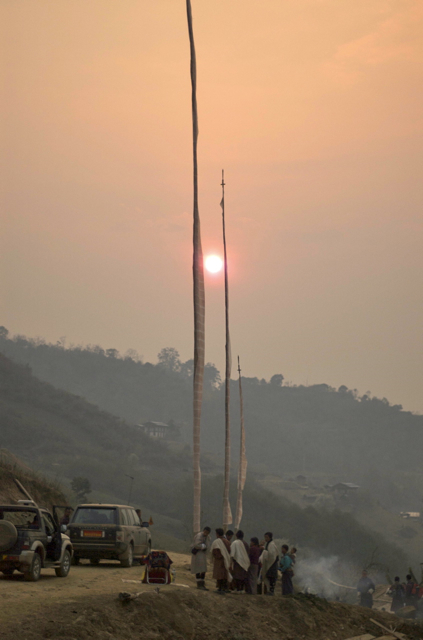
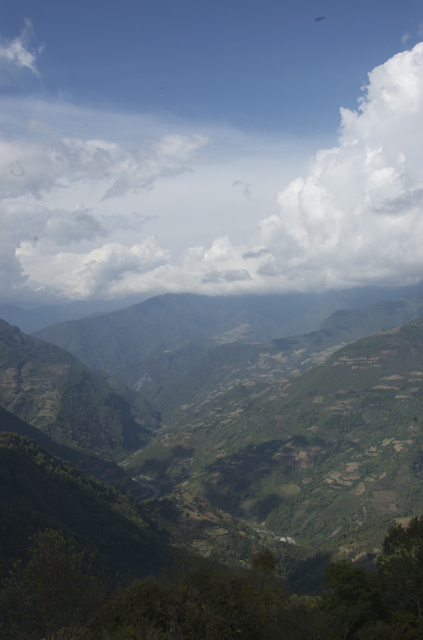
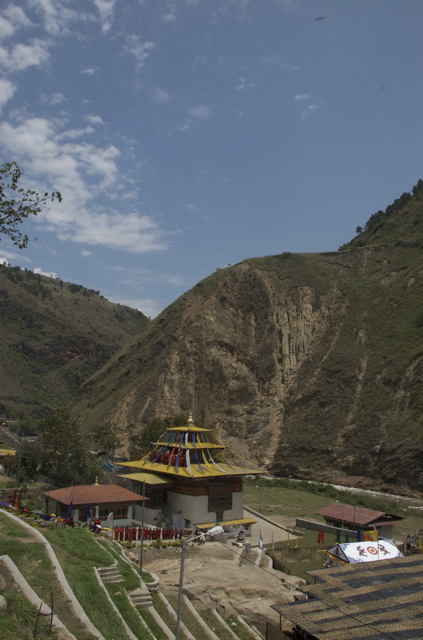
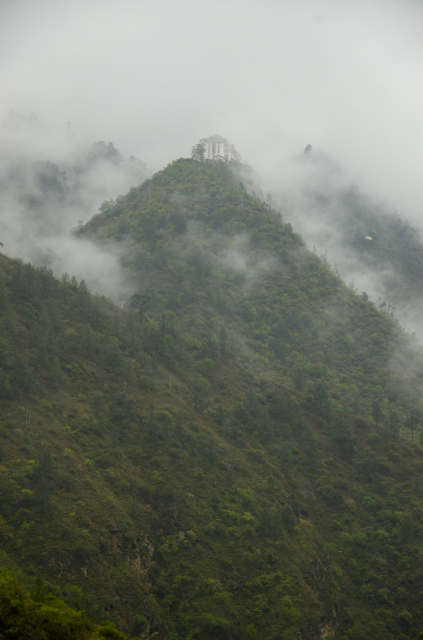
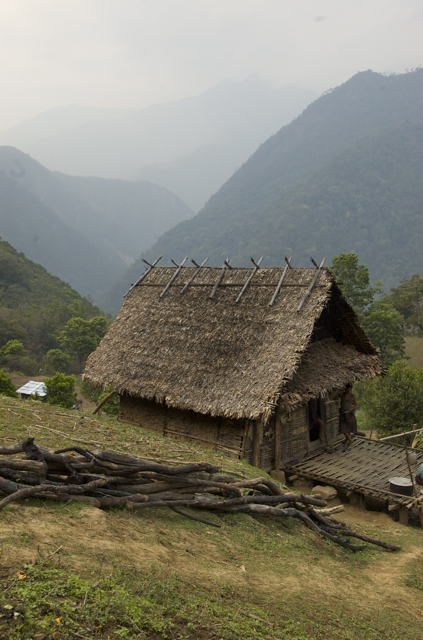
This time I let my pictures tell much of the story.

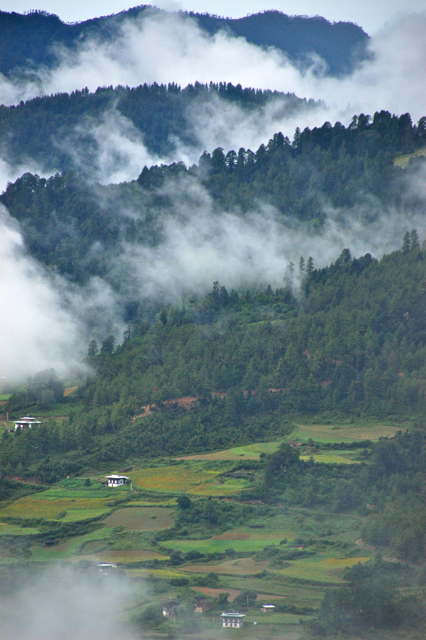
Clouds envelope mountains over Dawakha (Paro) 

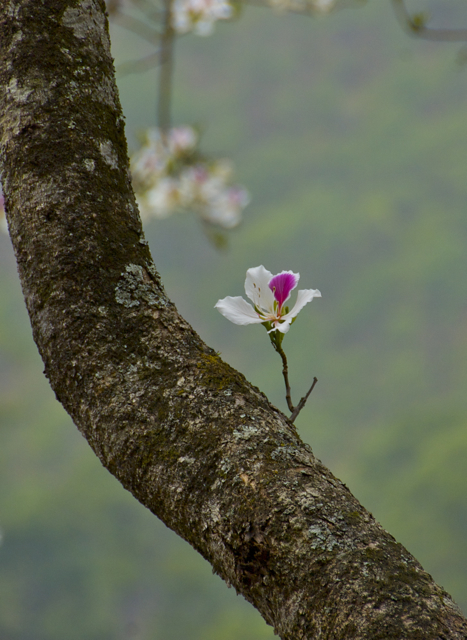
Magnolia blooms in Athang Rukha.

The dreadful Thrumshingla (actually Phrumshingla) divides the Eastern Bhutan
with Central Bhutan.

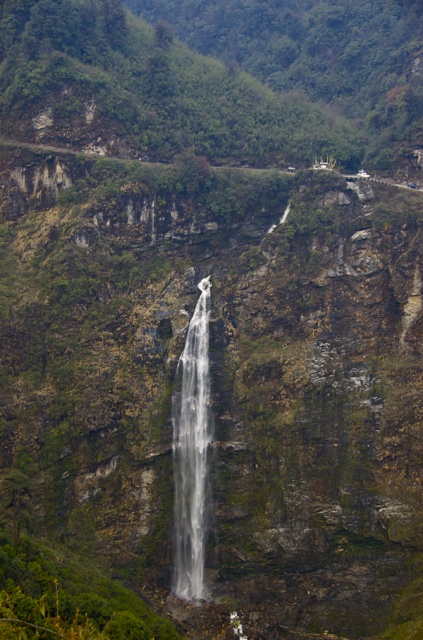
The much feared stretch of Namling (Bumthang-Monggar road) actually hosts a
beautiful waterfall

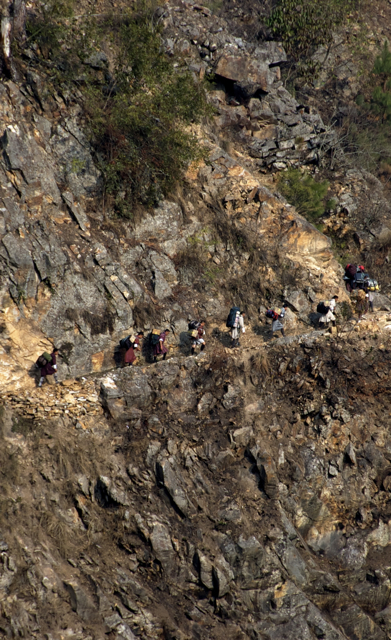
Trekking to Kengkhar (lower Monggar).  Even the locals fear doing that 
trek because there are no streams or springs for days.
Minjey (Lhuentse). People wait along the road to see the King.  Some are there
to get a glimpse.  Others to appeal for some help or to seek justice they feel they 
are denied.  

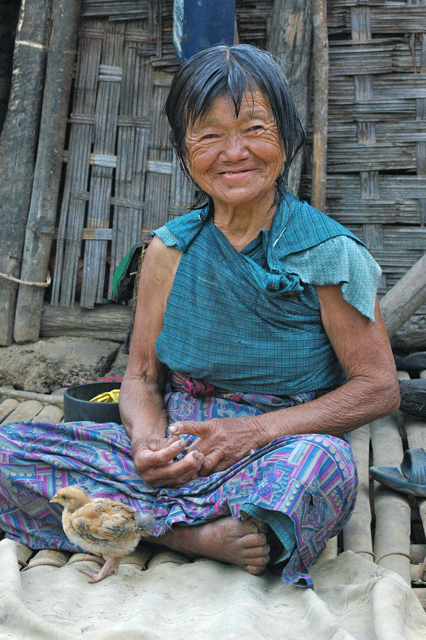
Olep woman, Lower Wangdue.  Oleps, together with their cousins,
the Mongpa are believed to be the original inhabitants of Bhutan. 

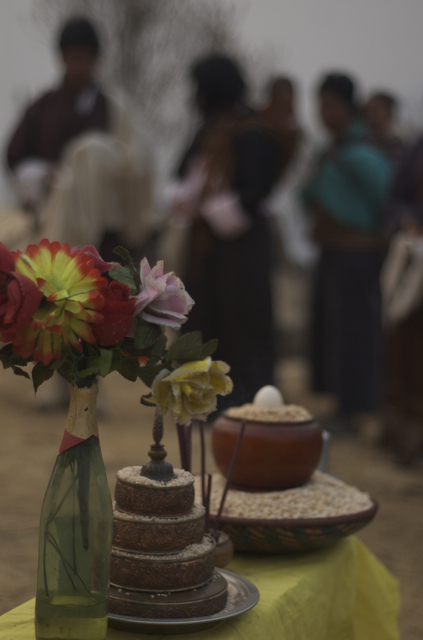
A simple and heart-felt offering to the People's King.  These traditional offerings 
are usually made to VVIPs when they visit rural areas of Bhutan.
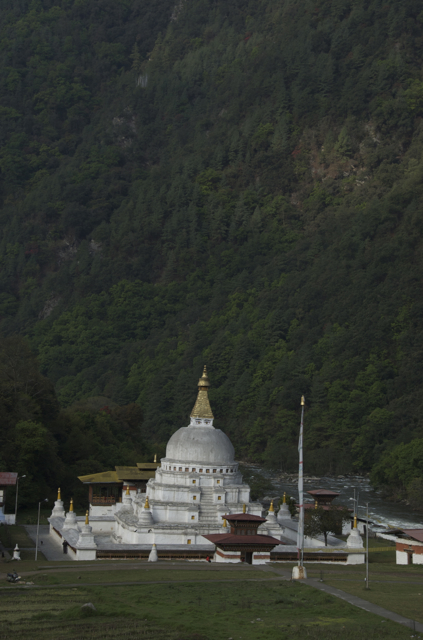
Chorten Kora (Tashi Yangtsi) - a place where a demon was subdued


Gomdar (Samdrup Jongkhar)  where Nyera Ama river runs through

Gomokora (Tashi Yangtse), one of the holiest places in Bhutan

Tashigang Dzong
Kheng Gongdue (Monggar)

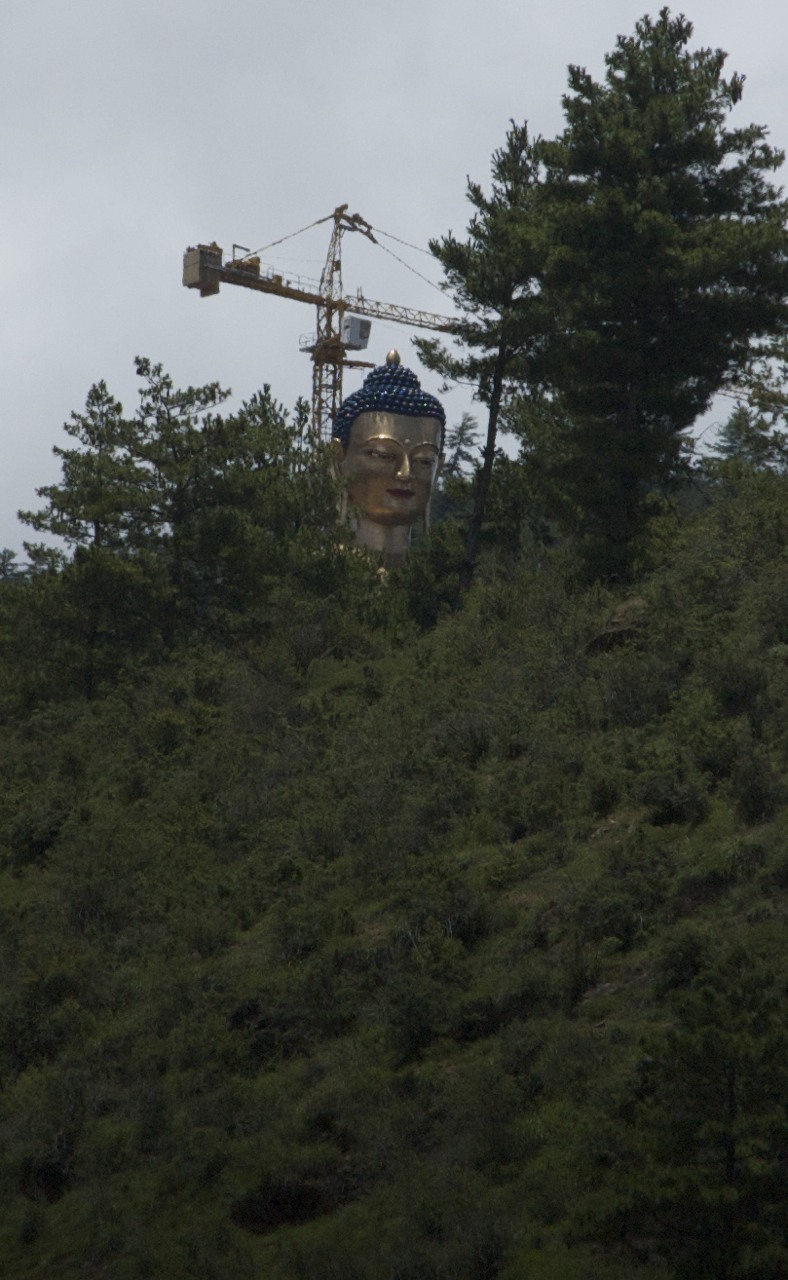
Head of Buddha