Dutch online rights group Bits of Freedom fundraiser

October 6th, 2011

Ot sez, "Dutch digital rights organisation Bits of Freedom is raising money to ensure it can continue defending online freedom in the coming years. Bits of Freedom fights for an open Internet which is accessible to all, where people can share information and where private communication remains private. As a result of Bits of Freedom's work, The Netherlands is the first country in Europe to launch a net neutrality law. If you think that Bits of Freedom is doing important stuff, you can support our work today at our campaign page. Thank you!"

They've got my support!

Do your bit! « Bits of Freedom

(Thanks, Ot!)

Steve Jobs has died.

October 5th, 2011

Steve Jobs, the co-founder of Apple, passed away today after a long battle with pancreatic cancer. He was 56. Here is the statement from Apple's Board of Directors.

Jelani, a 16-year-old Occupy Wall Street protester

October 5th, 2011

[Video Link]

Turnstyle News from Oakland, CA interviewed Jelani, a 16-year-old protester who traveled with his grandmother from Pontiac, Michigan to New York City for the Occupy Wall Street protests. "I had never slept on the street before," he says. His mom said it was okay to take time out from school, because he has a 4.0 GPA. What a cool kid, and what a cool mom and grandmother he has.

(Thanks, Alejandro De La Cruz)

Molly Crabapple's Occupy Wall Street "Vampire Squid" poster, for your printing/stenciling pleasure

October 5th, 2011

Artist Molly Crabapple created this downloadable, printable, stencil-able, remixable poster with an excellent reference to Matt Taibbi's classic characterization of Wall Street fraudsters: a bunch of vampire squids.

At Chicago Board of Trade: "We are the 1 percent" signs mocking Occupy Wall Street and Occupy Chicago protests

October 5th, 2011

Arturas Rosenbacher (@USAanon) shot this photograph of windows in the building where the Chicago Board of Trade is located. The CBOT was established in 1848, and is the world's oldest futures and options exchange.

"We are the 1%," the sign reads, an apparent response to the Occupy Chicago (and Occupy Wall Street) protests. "We are the 99%" is one of the mantras of that movement for financial reform.

There's a related article at the Village Voice.

Interactive map of Occupy Wall Street protests

October 5th, 2011

Mother Jones is maintaining an interactive map of "Occupy" protests around the US, and beyond. That little lonely red dot in the Pacific is a demonstration in Hilo, Hawaii! If you know of others, tell them: "Send a link to a news article or blog posts to traja [at] motherjones [dot] com or @tasneemraja."

You can find more information about demonstration gatherings at the Occupy Wall Street and Occupy Together websites, the "official" sites for this movement. The latter shows more than 300 Occupy meetups in cities around the world.

(thanks, Michael Mechanic)

Hitler is Angry About the iPhone 4S

October 5th, 2011

[Video Link] This one is inspired. (Via Cynical-C)

Occupy Everywhere

October 5th, 2011

Friends in San Francisco, Los Angeles, New York, and other cities around the U.S. are sharing tweets, photos, and texts with me today about Occupy Wall Street and spinoff demonstrations. I was on IM with Boing Boing pal Joe Sabia in New York City, who co-curates Boing Boing's in-flight video channel on Virgin America airlines, and he abruptly signed off: "GTG. JOINING THE PROTEST."

Moments later he texts me from his phone, out in the streets: "A protest just came by, and I spontaneously joined. Kind of amazing. About a thousand NYU and New School students coming in from Washington Square Park to Wall Street." And a few minutes after that, "This is definitely more than a thousand."

The New York Observer reports on numbers at nearby Foley Square:

Union members representing the AFL-CIO (AFSCME), TWU Local 100, and SEIU 1199, among others, were scheduled to join the protesters, and it’s an older crowd than previous marches. Occupy Wall Street organizers are estimating the crowd to be 10,000 people.

Filmmaker Michael Moore tweets: "#OccupyWallStreet has shut down Broadway. Wow. NYPD prohibiting traffic."

Meanwhile, I see friends Doc Pop and Quinn Norton live-tweeting protests in San Francisco. "Today's #occupywallstreet protest in SF is surprisingly big," Doc Pop writes, with the photo above, "A solid group about 3 blocks long."

Quinn tweets, "Marching through the tenderloin. 99% indeed."

In Los Angeles, where I am based, some remarkable news breaking this afternoon: the City Council has voted to officially support Occupy LA, and is asking the mayor to issue an executive order supporting the movement and its goal of financial reform, and reducing the gap between rich and poor in America.

Update: In Seattle, police are forcibly removing the tents at an "Occupy" demonstration/encampment. @occuppyseattle's feed has details. There are reports that large numbers of arrests are being made there.

Below, Gawker's Adrian Chen grabbed this photo at the NYC demos today. "To be honest, I don't get it," he says. "But I like it." Boing Boing readers, what's happening where you are?

Photographic proof of the isolator

October 5th, 2011
201110051227

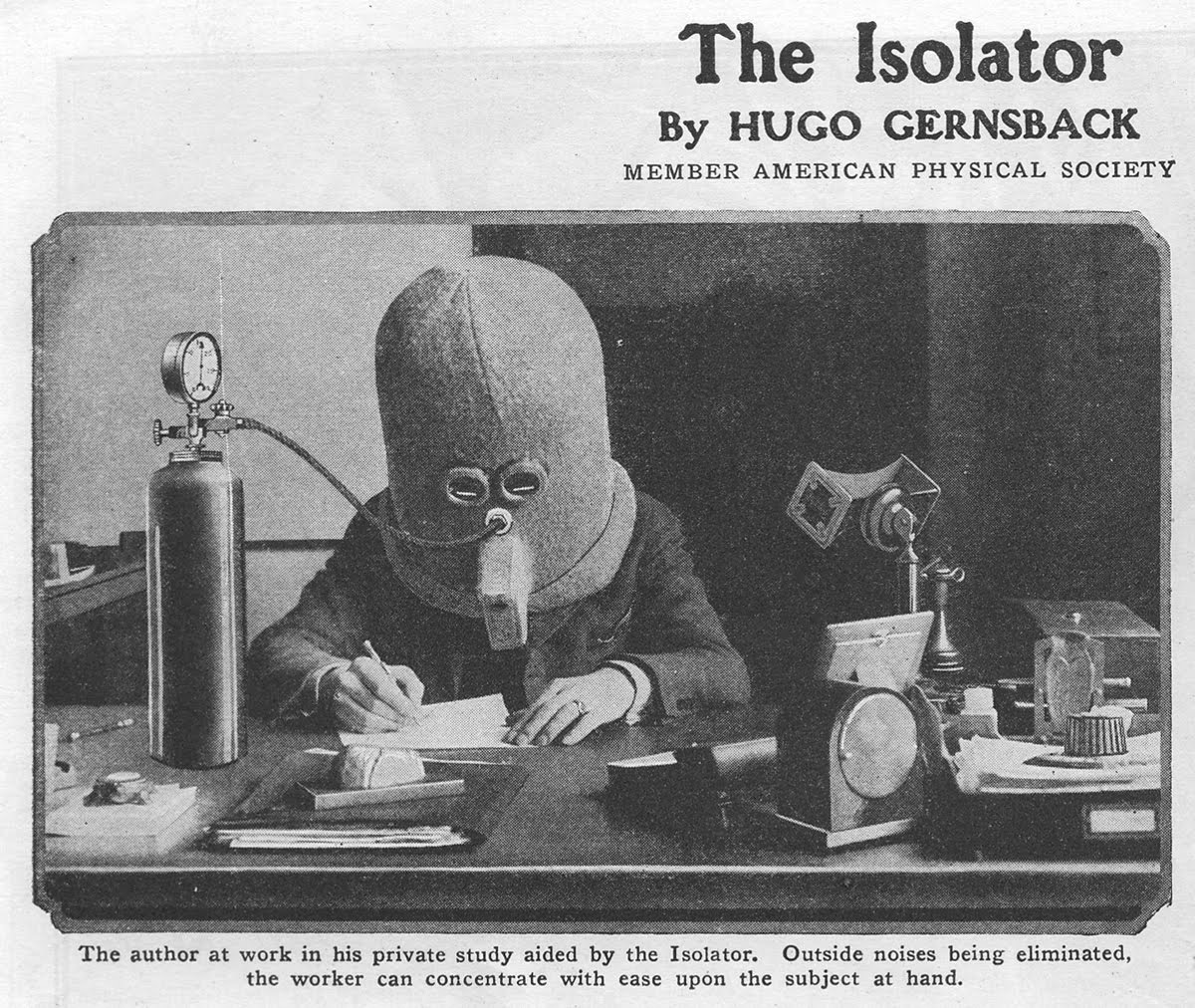
Thanks to 50 Watts for posting this photo of The Isolator from Hugo Gernsback's Science and Invention in 1925. See the cover I posted yesterday. (Via A Great Disorder)

Dan Bull's #occupywallstreet rap

October 5th, 2011

Copyfighting British nerdcode rapper Dan Bull sez, "I've now made a rap video for #occupywallstreet. The video mixes Radiohead's Street Spirit with dubstep and my own lyrics."

The most important thing I learned from a teacher

October 5th, 2011

Who inspired you?

The role that teachers play in influencing the lives of their students is something that's been lost in current debates about education mandates and standardized testing. Teaching isn't just about making sure kids can pass exams. It's also about helping future adults find their gifts, discover their interests, and learn who they want to be. That's a hard thing to quantify. You can't really put together a concise list of "Children I've Inspired" for a CV. But this is the part of a teacher's job that is the most lasting. What we remember about good teachers isn't necessarily the dry facts they taught us, it's the doors they opened, the curiosity they kindled, and the moments where they made us rethink everything.

Science journalist Steve Silberman is married to one of America's hard-working teachers. Watching his husband, Keith, inspired Steve to collect stories of how teachers shaped the lives of a wide range of writers, thinkers, and scientists. In a post on Steve's blog, you'll find stories from people like award-winning journalist Deborah Blum, cultural critic Mark Dery, and molecular biologist Bonnie Bassler.

I'm honored to be a part of this line up, as well. Below is my contribution, dedicated to the grade school teacher who made me the person I am today.

I had the same teacher for 4th and 5th grades, Shirley Johannsen. She started teaching at State Street Elementary in Topeka, Kansas in 1963, so by the time I met her in the late 1980s, this woman was already educating the children of her first students. She taught both grades, simultaneously, in the same classroom. And there were more than 20 of us in each grade. Forty-plus students, one room, one well-loved Apple IIE, and Ms. Johannsen.

That sounds like a recipe for a failing school, but Shirley Johannsen was one of the best teachers I have ever had. There are two things this woman did that completely changed my life.

First, Ms. Johannsen made me a writer. It was in her classroom that I first made the connection between my obsessive love of reading, and the fact that I could write books, too. And she encouraged me to write, not just for school assignments, but for fun and for practice. She was the first person who told me that writing was something I was good at. She was my first editor.

Second, Ms. Johannsen made me love science. In my memories, it’s like I woke up one day, in her classroom, with a 9-volt battery and an electric switch in my hand. Before her, science was dinosaurs and trips to the museum with my parents. After, it was something to look forward to every school year—new discoveries, surprising knowledge, a better understanding of how the world around me worked.

Today, I’m a science journalist. I love my job. And I owe that to the teacher who saw my gifts and inspired my curiosity.

Comic about upcoming referendum on muni broadband in Longmont, CO

October 5th, 2011

Chris from Telecommunications as Commons Initiative sez, "There's an upcoming referendum in Longmont Colorado on providing municipal Internet service over existing fiber. We know that the incumbents (mostly Comcast) will spend a lot to derail it, so I'm hoping this comic can make the rounds and 'prime' people so the anti-government mailers and robo-calls will be less effective."

I think it's a pretty good freshman effort; I like the GYWO style!

Animated video about the placebo effect

October 5th, 2011

[Video Link] The Professor Funk made a fun video about the placebo effect. Now excuse me while I shoot up my morning dose of saline.

Laughing Squid: The Strange Powers of the Placebo Effect

1000-piece stick bomb video

October 5th, 2011

[Video Link] This stick bomb, which winds through a house, is a thing of beauty. I like this YouTube comment: "I just reported this to the Improper Use of Magic Office over at the Ministry of Magic. Have fun going to Azkaban."

From Wikipedia:

A stick bomb is a mechanical spring-loaded device constructed out of flat sticks woven together under tension. Other names for stick bombs include Chinese stick puzzles, and frame bombs.

Simple stick bombs made out of four, five, or six sticks have been known to schoolchildren for ages. They were often known as ‘Chinese stick puzzles’ which indicates a possible origin for the devices. In the early 2000s, new methods for creating stick bombs of limitless size were developed.

Cynical-C: Stick Bombs

How Mark Boyle Lives on $0 a Year

October 5th, 2011
Over at credit.com I reviewed the book Moneyless Man: A Year of Freeconomics Living, by Mark Boyle
201110050927-1[I]n 2008 Mark Boyle decided to try living for a year without money. His self-imposed rules were simple: he would close his bank account and not spend or receive money (including checks and credit cards). He would live off-grid—that meant he would produce his own energy for illumination, heat, food preparation, and communicating with the outside world. He sold his houseboat and used the proceeds (a few thousand dollars) to set things up. This included buying a $300 solar panel to keep his laptop and cell phone charged (he accepted incoming calls, which he could do without subscribing to a cell phone plan.) He obtained an old trailer for free from a woman who wanted to get rid of it. He made a deal with an organic farm to let him park the trailer on the land in exchange for a few hours work each day. He built a compost toilet near his trailer to harvest the “humanure” for his gardening needs. He set up a solar shower, which consisted of a black plastic bag and a rubber hose to bathe with. For heating the trailer he bought a wood-burning stove made from an upcycled propane tank, and for cooking he built a “rocket stove,” designed to produce high-heat using small pieces of wood. A bicycle provided transportation.

He started his year of moneyless existence on international “Buy Nothing Day” (the day after Thanksgiving, which is the biggest shopping day of the year). And he wrote about his experiences in his book, Moneyless Man: A Year of Freeconomics Living.


Read the rest

TOM THE DANCING BUG: "Governor Rick, Science Hick," starring Rick Perry!!!

October 5th, 2011

Phished PayPal accounts selling on the criminal underground for $0.50 apiece

October 5th, 2011


Security researcher Brian Krebs got a look at the auction prices at iProfit.su, a criminal marketplace where you can buy hacked and phished PayPal accounts; he discovered that the going account for 100 zero-balance verified PayPal accounts is a mere $50 -- that's 50 cents per account.

Accounts are sold with or without email access (indicated by the “email” heading in the screenshot above): Accounts that come with email access include the username and password of the victim’s email account that they used to register at PayPal, the site’s proprietor told me via instant message. The creator of iProfit.su told me the accounts for sale were stolen via phishing attacks, but the fact that accounts are being sold along with email access suggests that at least some of the accounts are being hijacked by password-stealing computer Trojans on account holders’ PCs.

Zoomertab 2.0 Activity Tablet

October 5th, 2011

[Video Link] Sure am glad someone posted a copy of this "Timeless Seasons" shopping network clip, so I could share the good news about these ladygadgets with Boing Boing readers. I almost expected them to feature the Petticoat v 5.0, but I suppose that's an older model, from another show. (thanks, Casimir Nozkowski)

Walking Dead webisodes

October 5th, 2011
AMC has posted six short webisodes intended to whet your appetite for season two of the TV adaptation of The Walking Dead, a kick-ass zombie comic. They're goddamned scary stuff. (via JWZ)

Copepod up close

October 5th, 2011

This image of a tiny crustacean called a copepod is one of the winners of this year's Nikon Small World photography competition. At Deep Sea News, blogger ParaSight explains how the photographer, scientist Jan Michels, got the shot:

That right there is one gorgeous copepod, one of the bigger and more important groups of planktonic crustaceans. It looks huge but is actually tiny; probably 1-2mm. You can see how much richer and more detailed the image is (although the colour is stained flouresence, not natural). That particular image uses a technique called confocal microscopy, which uses lasers and clever optics to achieve great depth of field (where everything is in focus).

Caffeine hallucinations: Why "Letters to the Editor" matter in science

October 5th, 2011

Letters to the Editor are an interesting feature of peer-reviewed scientific journals. The function of this section varies from journal to journal, but, in general, this is where you'll find things like critiques of research published in previous issues, and short write-ups on findings that don't yet warrant their own big, formal research paper. Neuroscience blogger Vaughan Bell found a neat example of the latter in an old 1993 issue of the American Journal of Psychiatry.

Dr. Harold W. Koenigsberg and his colleagues were in the process of studying the causes of panic and anxiety disorders, in hopes of better understanding why some people are prone to panic attacks and others aren't. Part of that research involved determining whether you could have a panic attack while sleeping. They wanted to see whether a panic attack could still happen if the patient wasn't actively thinking about the causes of the panic attack, like they might when awake. Basically, Koenigsberg was trying to figure out how much of a panic attack was attributable to chemistry changes, and how much was related to cognitive processing.

Koenigsberg and company injected sleeping patients with caffeine, to produce the physical symptoms of panic. And that's when they noticed something odd. Two of the patients reported olfactory hallucinations—they smelled things that weren't there. Here's what Koenigsberg wrote in his Letter to the Editor:

Mr. A, a 38-year-old man with no personal or family history of psychiatric disorders, received an intravenous dose of 250 mg of caffeine, delivered as a bolus over a 60-second period during an episode of stage 3-4 sleep. Fourteen minutes after receiving the caffeine, he awakened and reported an “interesting smell or taste-more like a smell.”

Ms. B, a 34-year-old woman with a generalized anxiety disorder, awakened experiencing a smell like that of “plastic or burnt coffee” 3 minutes after receiving a 250 mg bolus of caffeine during a period of stage 3-4 sleep.

Previous research by other people had found that hallucinations like this could happen, but the hypothesis had been that the hallucinations were related to seizures. Koenigsberg's patients had no history of seizures, and they hadn't shown any signs of experiencing seizures when they had their hallucinations.

So Koenigsberg offered a new hypothesis: We know caffeine can work as a taste enhancer. So, maybe, the intravenous caffeine was either causing people to pick up smells and tastes that were normally undetectable, or the caffeine was prompting sensory systems to trick themselves, finding "smells" where none actually existed.

And this is why Letters to the Editor are so nifty. Koenigsberg later published on his panic attack study, but the biochemical function of caffeine on the human sensory system wasn't something he was much interested in. Letters to the Editor allowed him to share a weird finding, which might otherwise have been shoved into a drawer, never to be heard from again.

Instead of being lost, Koenigsberg's finding on caffeine-induced hallucinations went on to influence at least four other studies, including one on migraine hallucinations published last month.

Image: Caffeine fix, a Creative Commons Attribution (2.0)image from davemorris's photostream

MetaMaus: the secret history of Art Spiegelman's Pulitzer-winning Maus

October 5th, 2011

More than a quarter-century since its inital publication, Maus, Art Spiegelman's Pulitzer-winning graphic novel history of his father's Holocaust experience, is still counted as one of the seminal documents in the history of comics, of memoir, and of Holocaust stories.

MetaMaus: A Look Inside a Modern Classic, Maus, just released, is an in-depth look at the art, the psychology, the history and the politics of Maus. It consists primarily of a long interview with Speigelman, in which he describes the artistic influences he took to his task, the artistic challenges he met, the familial frustrations he dealt with in interviewing his father, the political, social and professional fallout from Maus's success, and many other subjects.

Spiegelman is well-spoken and insightful, and is one of those rare creators who can talk coherently about his own work and process. His recollections and analysis are complemented by interviews with his wife and children, as well as a transcript of some of his original interviews with his father. MetaMaus is thoroughly illustrated with excerpts from Spiegelman's sketchbook, from the original source materials he used when creating his book, and news clippings and other ephemera from the books' storied history.

The book is accompanied by a DVD with about 4GB of video and audio, including the interview that makes up the book, the original interviews with Speigelman's father, and several videos and images of the source material. The DVD nominally requires a Mac or PC to view, and the media files are hidden on the disk, which makes it hard to move the MP3s of the audio to your portable player. I solved this by creating a disk image of the DVD, which made all the files visible again. I'm looking forward to listening to the interviews on the move.

Mark blogged the book's trailer last month, and it gives a good sense of how gripping and smart the book and DVD are.

New York State Senators want "refined First Amendment," laws to prevent trolling, flaming and excluding people from online groups

October 5th, 2011

New York State Senators Jeff Klein, Diane Savino, David Carlucci and David Valesky apparently missed civics class, because they think the First Amendment grants the "privilege" of free speech, not the right, and that this "refined" view of free speech should be implemented in order to stop people from saying stupid things on the Internet.

Their report suggests that a "refined" First Amendment could be used to stop "happy slapping" (a short-lived violent craze from 2005), trolling, "flaming," and "INTENTIONALLY AND CRUELLY EXCLUDING SOMEONE FROM AN ONLINE GROUP" (the caps are theirs).

Seriously? If we don't let you into the club, it's now a form of cyberbullying? It makes you wonder what happened to these particular Senators when they were kids.

The paper also attacks "anonymity," again ignoring how anonymity can often be extremely helpful to kids who wish to discuss things and ask questions without revealing who they are.

As for where they're going with this? Well, you guessed it: they're planning to introduce new laws to deal with cyberbullying (even though NY already has such a law). The plan is to extend two existing areas of law: "stalking in the third degree" will now include cyberbullying, and "manslaughter in the second degree" will be expanded to "include the emerging problem of bullycide."

(via /.)

(Image: The First Amendment of the U.S. Constitution, a Creative Commons Attribution Share-Alike (2.0) image from brentdpayne's photostream)

Scientists simulate Europa

October 5th, 2011
Researchers at the Universidad de Buenos Aires recreated conditions found on the surface of Jupiter's moon Europa in the lab, and then proved that some Earth organisms are capable of surviving in that extreme environment. At least, for three hours. It's one experiment in a growing body of work aimed at proving that Earth could seed other planets with life.

Visit the Unicorn Museum

October 5th, 2011

Briefly mentioned on BoingBoing back in 2007, The Unicorn Museum is a spot-on (and Biblically correct!) parody of the Creation Museum. This photoshopped billboard kind of makes me wish it were a real place.

Hopefully, this makes up for the bladder stone surgery.

How To: Remove a bladder stone in the days before anesthesia

October 5th, 2011

The Chirurgeon's Apprentice is an entire blog dedicated to eye-witness accounts of surgery in the days before anesthesia. Oh, Internet. Thou art wonderful and horrible.

Collected by University of London medical historian Lindsey Fitzharris, the stories come from well-documented sources, from the 17th century onward. Part of the goal here is to follow the path of surgery as it really started to become its own profession ... separate from that of barber. Yes, this is going to be every bit as gory as you imagine. I'll start looking for a unicorn now.

If you visit the Gordon Museum at Guy’s Hospital in London, you will see a small bladder stone—no bigger than 3 centimetres across. Besides the fact that it has been sliced open to reveal concentric circles within, it is entirely unremarkable in appearance. Yet, this tiny stone was the source of enormous pain for 53-year-old Stephen Pollard, who agreed to undergo surgery to remove it in 1828.

Although the operation itself lasted only a matter of minutes, lithotomic procedures were painful, dangerous and humiliating. The patient—naked from the waist down—was bound in such a way as to ensure an unobstructed view of his genitals and anus [see illustration]. Afterwards, the surgeon passed a curved, metal tube up the patient’s penis and into the bladder. He then slid a finger into the man’s rectum, feeling for the stone. Once he had located it, his assistant removed the metal tube and replaced it with a wooden staff. This staff acted as a guide so that the surgeon did not fatally rupture the patient’s rectum or intestines as he began cutting deeper into the bladder. Once the staff was in place, the surgeon cut diagonally through the fibrous muscle of the scrotum until he reached the wooden staff. Next, he used a probe to widen the hole, ripping open the prostrate gland in the process. At this point, the wooden staff was removed and the surgeon used forceps to extract the stone from the bladder.

Unfortunately for Stephen Pollard, what should have lasted 5 minutes ended up lasting 55 minutes under the gaze of 200 spectators.

Via Ed Yong

Image: Ouch, again., a Creative Commons Attribution (2.0) image from rberteig's photostream

Image shows a kidney stone. Kidney stones and bladder stones are basically the same thing, though. Their names signify where the stone formed. Either way, they're made of the same stuff. And more people post images of their kidney stones to Flickr.

Watch lectures on mind, brain, and human nature

October 5th, 2011

On Monday, I told you about The Nobel Conference at Gustavus Adolphus College, in St. Peter, Minn., where top neuroscientists are speaking about the mind, the brain, and what it means to be human.

Now, I have some good news for those of you who couldn't play hooky this week, couldn't get tickets to the free event, and/or don't actually live anywhere near St. Peter, Minn. You can watch The Nobel Conference online.

Today's lectures will be broadcast on a live feed. You can also submit questions through the site and participate in the Q&A after each lecture. The first speaker is John Donoghue, director of the Institute for Brain Science at Brown University. Starting at 10:00 am, Central, he'll be talking about a topic near and dear to every Happy Mutant's heart: "Merging Mind to Machines: Brain Computer Interfaces to Restore Lost Motor Function."

If, for some reason, you can't start your morning off with healthy dose of cyborgs, all the lectures from Tuesday and today will eventually be archived as online videos. Right now, there's only one lecture available this way—yesterday's morning session on new therapies for autism. I've embedded that video above. But check the Conference's site for other lectures, coming soon!

Video Link

Thanks to Lisa Dubbels for pointing this out!

Italy's insane Internet law prompts removal of Italian Wikipedia

October 5th, 2011

Prompted by Italy's punitive (batshit) wiretapping law proposal, Wikipedia has removed its Italian version and now directs anyone trying to find Italian Wikipedia to a page explaining that Italy's Internet law will make it impossible to have an Italian Wikipedia:

This proposal, which the Italian Parliament is currently debating, provides, among other things, a requirement to all websites to publish, within 48 hours of the request and without any comment, a correction of any content that the applicant deems detrimental to his/her image.

Unfortunately, the law does not require an evaluation of the claim by an impartial third judge - the opinion of the person allegedly injured is all that is required, in order to impose such correction to any website.

Hence, anyone who feels offended by any content published on a blog, an online newspaper and, most likely, even on Wikipedia can directly request to publish a "corrected" version, aimed to contradict and disprove the allegedly harmful contents, regardless of the truthfulness of the information deemed as offensive, and its sources...

The obligation to publish on our site the correction as is, provided by the named paragraph 29, without even the right to discuss and verify the claim, is an unacceptable restriction of the freedom and independence of Wikipedia, to the point of distorting the principles on which the Free Encyclopedia is based and this would bring to a paralysis of the "horizontal" method of access and editing, putting - in fact - an end to its existence as we have known until today.

Bletchley Park gets a £4.6m grant, financed by government pro-innumeracy programme

October 5th, 2011


Bletchley Park, the birthplace of modern crypto and the home of the WWII codebreaking effort, has received a £4.6m Heritage Lottery Fund grant to fund restoration efforts and new exhibits. Bletchley was broken up after the war and its work was literally buried as part of the Cold War climate of secrecy that prevailed. In the years that followed, neglect and time led to the near-destruction of many of the historic sites. The Bletchley Park trust has since done amazing work on a shoestring budget to restore and preserve Bletchley, creating a fabulous museum and rebuilding some of the most beautiful electromechanical computers I've ever seen.

But there was only so much the Trust could do with no money. This grant is sorely needed, and this news fills me with delight.

Ironically, the money to restore Bletchley has come from the lottery, a government-run system designed to reinforce and exploit statistical innumeracy of the sort that Bletchley's cryptographers overcame in order to help win the war.

The investment will enable the restoration of key codebreaking huts and create a world-class visitor centre at the Buckinghamshire site.

The HLF said new exhibitions and interactive displays will bring Bletchley's story to life...

A spokesman for the Bletchley Park Trust said: "The ambition of the Bletchley Park Trust is to complete the restoration of the site, and to tell its story to the highest modern standards."

Feynman explains beauty and science

October 4th, 2011

Here's Richard Feynman monologing about the way that science creates new ways to appreciate the beauty of the world around us. Inspiring stuff, and the accompanying video is nicely apt.

(via Kottke)

Jahbulon, a demon for the modern age

October 4th, 2011


Steven Daily's "Jahbulon" (available as giclee on canvas print) is a thoroughly contemporary sort of demon -- the stuff of delirious and glorious nightmares.

(via Super Punch)

GamersOptOut will send printed EULA opt-outs to game companies on your behalf

October 4th, 2011


As game companies start to add conditions to their EULAs that prohibit class action suits for their negligence in handling your personal data, a collective of gamers called Gamers Opt Out have created a service that makes it easy to mail printed opt-outs from these conditions.

Individual lawsuits against game companies that harm their users through poor security practices are limited to those victims with the money and time to pursue them. Prohibiting class-action suits effectively kills the business model that consumer protection laws rely on: plaintiff-side attorneys who can recoup the millions it costs to sue companies for their transgressions and act as a check against corporate misdeeds.

Gamers Opt Out is a collective of gamers who are sick of absurd EULAs from game companies. These EULAs have clauses preventing class-action lawsuits, though you can opt out of the clauses by sending a letter. We want to make it easier for everyone to opt out because Sony, EA, et al, believe most people won't bother to. Let's show them they're wrong.

We will make it easy for you to create the letter needed to send to these companies and can even send the letter on your behalf at no cost. All we ask is that if you like what we are doing, spread the word or donate to help with the cost of paper and postage.

(via Wonderland)

Randomly generated 3D spaceships to print on your 3D printer, generated with WebGL

October 4th, 2011


Dolf sez, "Dolf Veenvliet aka macouno of Entoforms fame has been working on some fun tools to generate 3D forms. Under the ShapeWright moniker Dolf has produced a random space ship generator entitled shipWright that generates unique configurations of space ships ready for 3D printing (and freely downloadable). You can also have a personalized Space Ship generated by your name, or whatever text you enter into the build system."

This is pretty cutting-edge browser stuff. To get Firefox to try it, I had to force WebGL on -- type about:config into your location bar, then search for "webgl.force-enabled" and set it to "true."

(Thanks, Dolf!)

Charming song about Lego

October 4th, 2011

Do enjoy the lead single from USL's latest album, "Build Motherfucker!" (Thanks, Joel)

Chocolate-covered flour sacks as benches

October 4th, 2011


Dejana Kabiljo's contribution to Beijing Design Week are these flour-sacks covered in chocolate-looking polyol sponge frosting. The recyclable sofas are called LetThemSitCake.

Beijing Design Week has invited Vienna- based architect Dejana Kabiljo to contribute to the 751-D PARK DesignHop with her quirky installation “LetThemSitCake!” at 751-D PARK Power Square. Stacked bags of wheat, topped off with an oozing ‘chocolate icing’ resemble an inviting multi- layered sponge cake but are in fact soft and rather comfortable sofas inviting visitors to take a seat.

(via Crib Candy)

Portrait of a blogger in the 1920s

October 4th, 2011
201110041340

Old school blogger. From Hugo Gernsback's Science and Invention. Lots of other great science fiction illos on this page. (Via TIH)

Officer accused of terrorizing citizens, still on force

October 4th, 2011

Despite over 500 pages of internal affairs complaints lodged against Clayton County police officer Michael Hobbs, he is still on the force.

A Metro Atlanta police officer is accused of being out of control and assaulting the citizens he was sworn to serve and protect.

Chief Investigative Reporter Wendy Saltzman found dozens of use-of-force reports brushed aside by Clayton County internal affairs, including claims Hobbs is terrorizing citizens.

One of those citizens is Brian Hoolihan. Hoolihan passed out in his car along side a road in Clayton County in a diabetic coma back in 2007.  He had a sticker on the window of his car, warning about his life threatening medical condition.

A police report shows Officer Hobbs arrived at the scene and wrongfully assumed Hoolihan was drunk. Hobbs forced himself into the car and struck Hoolihan twice with a closed fist to the face and another blunt elbow blow to his head.

The photos of Hoolihan's face, which was beaten to a pulp while Hoolihan was in a diabetic coma, are stomach churning.

Watch Chief of Police Greg Porter defend Officer Hobbs in the video. No disciplinary action has been taken against Officer Hobbs.

Officer accused of terrorizing citizens, still on force (Via The Agitator)

Boss creates "Guess who I'm going to fire next" contest

October 4th, 2011

William Ernst, owner of the QC Mart chain of stores headquartered in Bettendorf, Iowa, has lost a court case against an employee who claimed benefits after quitting. Ernst had created a contest that invited his employees to guess who among them would be fired next, and a cashier named Misty Shelsky quit. Ernst tried to get out of paying her benefits, saying that people who voluntarily leave their positions are not entitled to unemployment pay. Administrative Law Judge Susan D. Ackerman sided with Shelsky, calling the contest "egregious and deplorable."

New Contest – Guess The Next Cashier Who Will Be Fired!!!

To win our game, write on a piece of paper the name of the next cashier you believe will be fired. Write their name [the person who will be fired], today’s date, today’s time, and your name. Seal it in an envelope and give it to the manager to put in my envelope.

Here’s how the game will work: We are doubling our secret-shopper efforts, and your store will be visited during the day and at night several times a week. Secret shoppers will be looking for cashiers wearing a hat, talking on a cell phone, not wearing a QC Mart shirt, having someone hanging around/behind the counter, and/or a personal car parked by the pumps after 7 p.m., among other things.

If the name in your envelope has the right answer, you will win $10 CASH. Only one winner per firing unless there are multiple right answers with the exact same name, date, and time. Once we fire the person, we will open all the envelopes, award the prize, and start the contest again.

And no fair picking Mike Miller from (the Rockingham Road store). He was fired at around 11:30 a.m. today for wearing a hat and talking on his cell phone. Good luck!!!!!!!!!!

(via Lowering the Bar)

(Image: Ultimate Anal Douche Hygienic System easy to clean Rectal Syringe, Amazon)

Michele Bachmann honored by Bad Lip Reading

October 4th, 2011

[Video Link] A new video from Badlipreading.com always brightens my day. "I went from being two banana plants up to a thrill-seeking shark who sold pictures of different toys I wanted." (Via Dangerous Minds)

Gallery of Hildebrandt illustrations

October 4th, 2011
201110041241

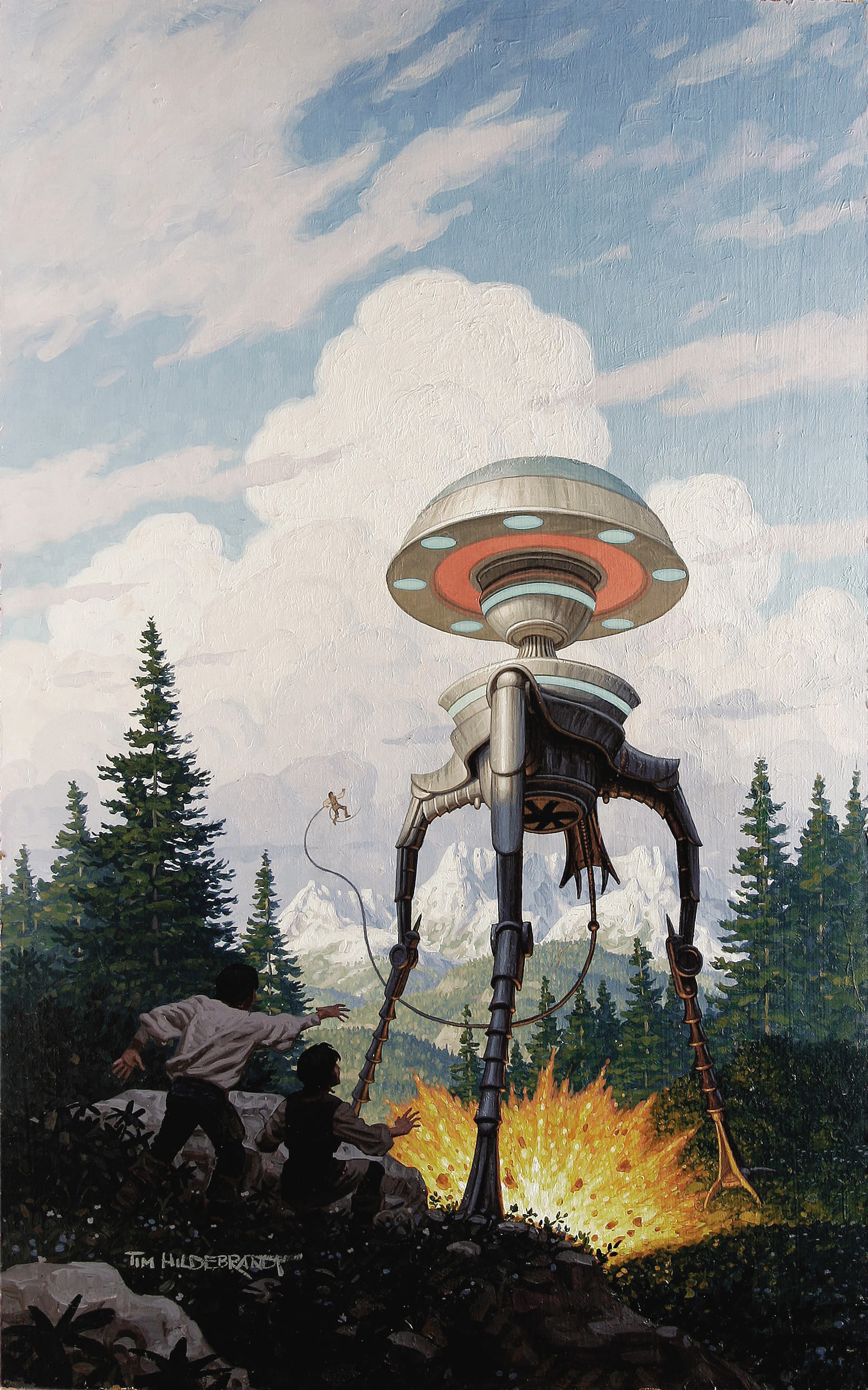
The fantastic Monster Brains blog has some examples of Greg and Tim Hildebrandt's excellent book cover art. The painting above is the cover for John Christopher's wonderful young adult science fiction novel from 1967, The White Mountains.

Gallery of Hildebrandt illustrations

FM Tech